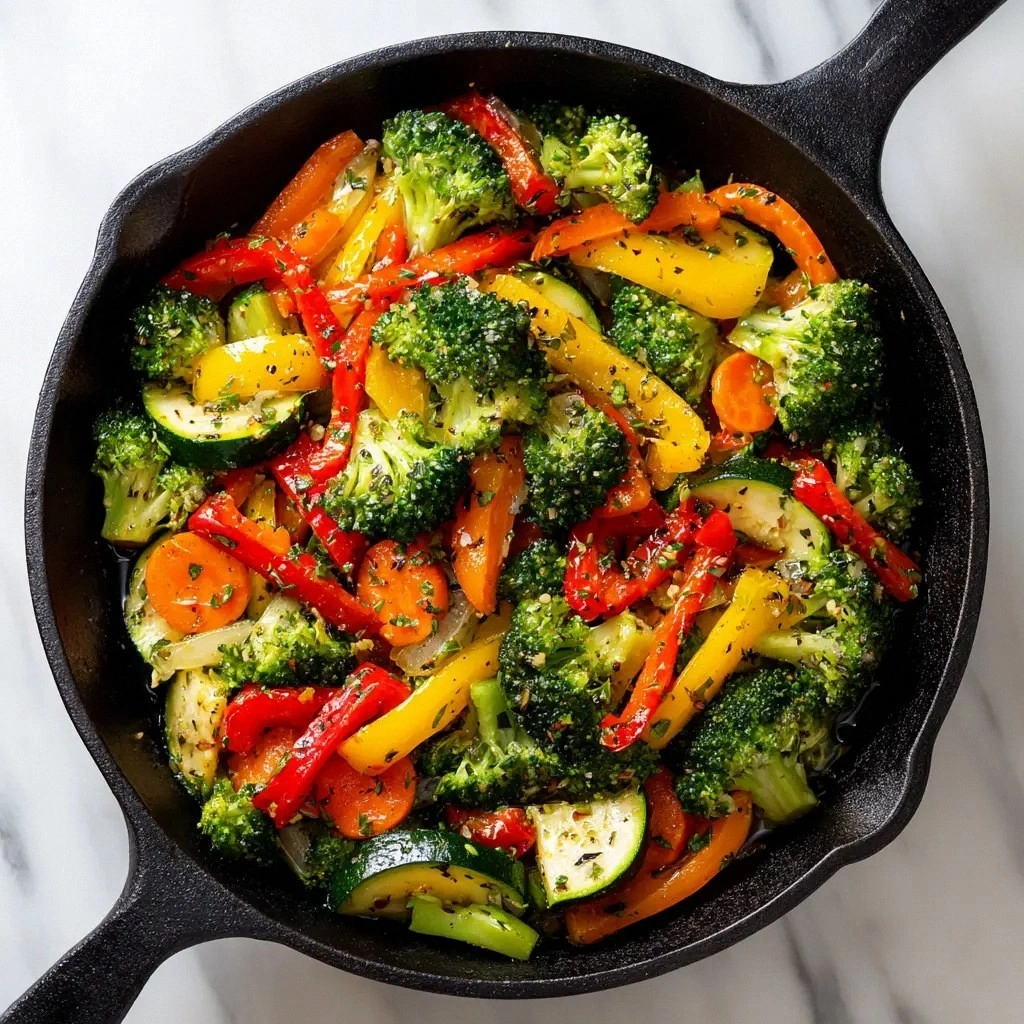
I was halfway through a midnight snack run, eyes glazed with the glow of my phone, when the kitchen exploded in a chorus of sizzling and splattering. The onion I’d sliced with reckless enthusiasm had turned to a caramelized cloud, the garlic was burning, and my skillet was a bubbling mess of oil and vegetables. I stared at the chaos, muttering that I’d never again trust my own cooking. That night, I vowed to create a sautéed vegetable recipe that would transform any kitchen disaster into a triumph of flavor.
Picture the aroma of fresh garlic and caramelized onion wafting through the air, mingling with the earthy scent of broccoli and the sweet perfume of bell pepper. Feel the heat of the pan as it reaches the perfect medium-high temperature, the sound of vegetables sizzling like a tiny orchestra. Taste the snap of a crisp carrot, the tender yet firm bite of zucchini, and the subtle, peppery bite of red pepper flakes that dance across the tongue. The texture is a harmonious blend of crunch and melt, a symphony of sensations that makes your mouth water before you even take a bite.
What sets this version apart is that it’s not just a side dish; it’s a culinary statement. Every ingredient is chosen for its ability to complement and elevate the others, from the silky olive oil that binds the flavors to the bold Italian seasoning that adds depth. The method is simple yet precise, ensuring that each vegetable retains its natural crunch while absorbing the savory sauce. It’s a dish that feels indulgent, yet it’s packed with nutrients and low in calories.
And here’s the kicker: I discovered a secret technique that turns ordinary sautéing into a flavor explosion—adding a splash of lemon juice at the very end. That bright, acidic note lifts the entire dish, giving it a fresh finish that’s impossible to ignore. Let me walk you through every single step — by the end, you’ll wonder how you ever made it any other way.
What Makes This Version Stand Out
- Taste: The blend of garlic, Italian seasoning, and a touch of red pepper flakes creates a savory, slightly spicy profile that cuts through the sweetness of the vegetables. The final squeeze of lemon adds a bright, citrusy lift that keeps the dish from feeling heavy.
- Texture: Each vegetable is cooked to a perfect balance of crispness and tenderness, giving the dish a satisfying bite that’s far from mushy.
- Simple Prep: No special equipment or exotic ingredients required—just a skillet, a few staples, and a dash of confidence.
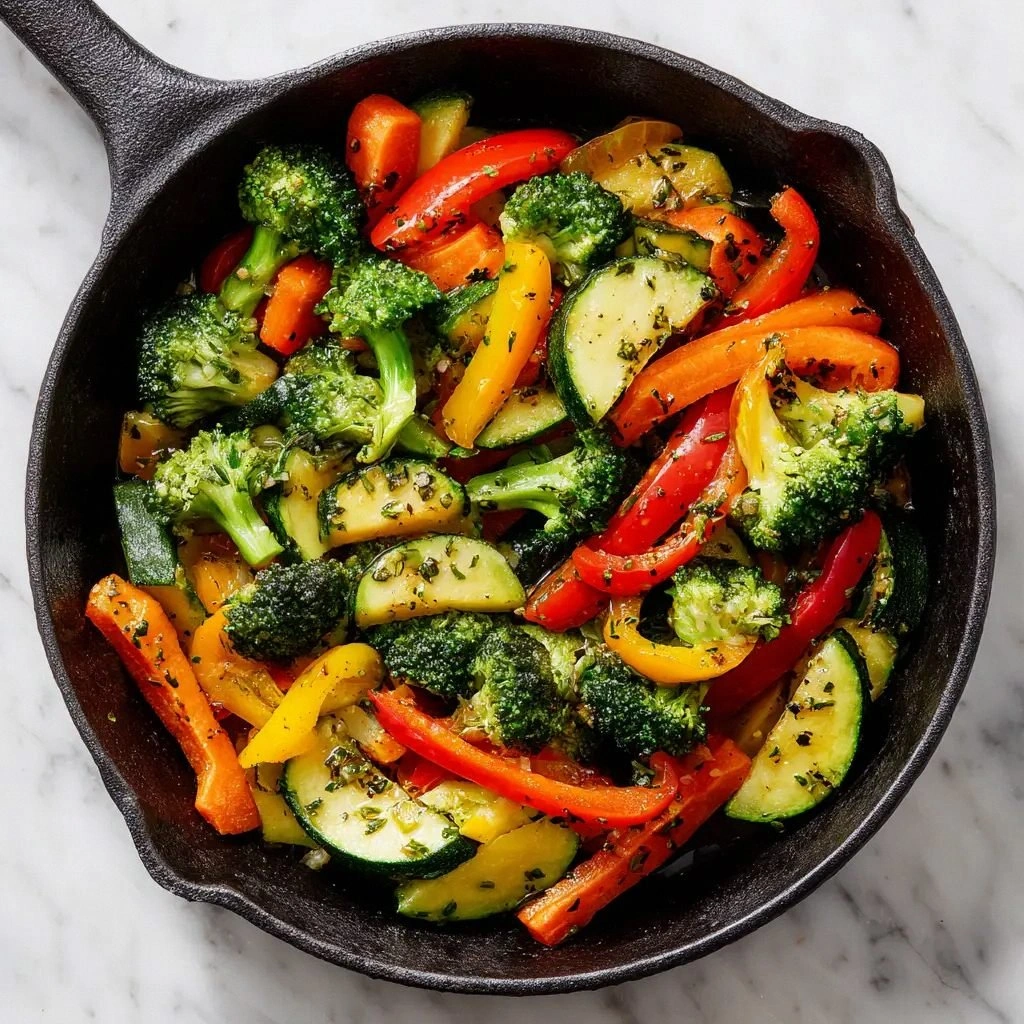
- Uniqueness: The combination of red and yellow bell peppers with broccoli and zucchini is a fresh take on classic sautéed veggies, offering a rainbow of colors and flavors.
- Crowd Reaction: Friends rave about how this dish turns into a party starter or a quick side that never disappoints. I dare you to taste this and not go back for seconds.
- Ingredient Quality: Using fresh, organic produce whenever possible ensures the most vibrant flavors and the highest nutrient density.
- Cooking Method: The sauté technique preserves nutrients while infusing the veggies with a caramelized, slightly smoky flavor.
- Make‑Ahead Potential: This dish can be reheated in the microwave or skillet with a splash of water, and it still retains its crunch.
Inside the Ingredient List
The Flavor Base
Olive oil is the silent hero that carries the flavors of the vegetables and the seasonings. It adds a silky texture and a subtle fruity note that enhances the natural sweetness of the carrots and bell peppers. If you’re watching calories, swap for a light sesame oil or a splash of vegetable broth for a lower-fat option, but keep in mind the flavor profile will shift slightly. When choosing olive oil, look for a cold‑pressed, extra‑virgin variety to maximize the antioxidants and depth of flavor.
The Texture Crew
Carrots, broccoli florets, and zucchini are the backbone of this dish, each bringing a unique bite. Carrots add a natural sweetness and a satisfying crunch if cooked just right; broccoli delivers a hearty bite and a pop of green; zucchini offers a tender, almost silky texture that balances the dish. Skipping any of these will change the harmony of the flavors; for instance, without broccoli you lose the earthy depth that pairs so well with the Italian seasoning. If you’re craving a different texture, try adding cauliflower florets for an extra crunch or swapping zucchini for eggplant for a meaty bite.
The Unexpected Star
Red and yellow bell peppers bring color, crunch, and a burst of sweet flavor that cuts through the savory notes. Their bright hues also make the dish visually appealing, turning a simple side into a centerpiece. If bell peppers are out of season or you prefer a different flavor, try sweet corn or diced peaches for a sweet twist. When selecting bell peppers, choose ones that feel firm to the touch and have a glossy, unblemished skin for maximum freshness.
The Final Flourish
Garlic, Italian seasoning, red pepper flakes, salt, and black pepper are the finishing touches that bind everything together. Garlic adds depth and aroma, while the Italian seasoning gives a Mediterranean kick. Red pepper flakes introduce a subtle heat that balances the sweetness of the vegetables. Salt and black pepper are essential for seasoning, but remember that the olive oil and garlic also contribute savory notes, so adjust accordingly. For a gluten‑free variation, simply omit any packaged Italian seasoning that may contain gluten; most dried herbs are naturally gluten‑free.
Everything's prepped? Good. Let's get into the real action.
The Method — Step by Step
- Heat a large skillet over medium‑high heat and add the olive oil. Once the oil shimmers, add the diced onion and let it soften for 2–3 minutes, stirring occasionally. The onion should start to turn translucent, releasing a sweet aroma that signals the base is ready. I always watch the color shift from pale to golden to ensure you’re not over‑cooking.
- Add the minced garlic, stirring quickly to prevent burning. Garlic cooks fast; you want it fragrant but not bitter. Let it sauté for about 30 seconds, then add the carrots. Carrots need a bit more time to soften while still maintaining their crunch; aim for 4–5 minutes.
- Introduce the broccoli florets, stirring to coat them with oil and seasoning. The broccoli should start to steam slightly but remain bright green. Cook for another 3–4 minutes, watching for the edges to develop a light golden color. This is when the broccoli begins to caramelize.
- Add the sliced zucchini and bell peppers. The zucchini cooks quickly; you want it just tender enough to hold its shape. Stir frequently to ensure even cooking and to prevent sticking. The bell peppers should retain some crunch and their vibrant colors.
- Sprinkle in the Italian seasoning, red pepper flakes, salt, and black pepper. Toss everything together, making sure the seasonings coat every vegetable. This is the moment of truth—your dish should smell toasty and fragrant.
- Reduce the heat to medium and let the vegetables finish cooking for another 5 minutes. The goal is for them to be tender but still crisp, with a slight char on the edges that adds depth of flavor. Keep the lid off to allow moisture to evaporate.
- If you prefer a slightly caramelized finish, add a splash of low‑sodium broth or a drizzle of soy sauce during the last minute of cooking. This adds umami and helps the vegetables absorb more flavor.
- Remove the skillet from heat and immediately squeeze fresh lemon juice over the vegetables. The acidity brightens the dish and cuts through the richness of the olive oil.
- Taste and adjust seasoning if needed—add a pinch more salt or pepper to suit your palate. The dish should be bright, savory, and slightly sweet from the caramelized vegetables.
- Serve hot, either as a side to your favorite protein or tossed with pasta for a quick, wholesome meal. Garnish with chopped parsley or a sprinkle of grated Parmesan for an extra layer of flavor.
That’s it — you did it. But hold on, I've got a few more tricks that'll take this to another level.
Insider Tricks for Flawless Results
The Temperature Rule Nobody Follows
Many cooks lower the heat too soon, which results in soggy vegetables. Keep the skillet at medium‑high for the first 5 minutes, then reduce to medium to finish cooking. This ensures the vegetables develop a nice sear while remaining tender inside. I once tried this trick and the difference was night and day—crisp edges that shatter like thin ice.
Why Your Nose Knows Best
Trust your nose—when the garlic and onion release a sweet, buttery aroma, you’re in the right zone. If the smell is sharp or metallic, you’re overcooking. The scent is a reliable indicator that the flavors are blooming, not burning.
The 5‑Minute Rest That Changes Everything
Let the sautéed vegetables rest for 5 minutes off the heat before serving. This allows the flavors to meld and the vegetables to finish cooking in their own steam. It also prevents the dish from drying out, keeping the vegetables juicy and vibrant.
The Quick Toss with Lemon
Add lemon juice at the very end to brighten the dish and balance the richness of the olive oil. The acidity also helps preserve the bright colors of the vegetables, making the dish visually stunning.
The Secret Salt Swap
Use a pinch of smoked sea salt instead of regular salt for a subtle smoky flavor that complements the Italian seasoning. Smoked salt adds depth without overpowering the natural sweetness of the carrots and bell peppers.
Creative Twists and Variations
This recipe is a playground. Here are some of my favorite ways to switch things up:
Spicy Thai Fusion
Swap Italian seasoning for Thai basil and add a tablespoon of fish sauce. Finish with a squeeze of lime and a sprinkle of crushed peanuts for crunch. This version turns the dish into a vibrant, aromatic Thai stir‑fry.
Mediterranean Delight
Add kalamata olives, capers, and a drizzle of extra virgin olive oil. Top with crumbled feta for a creamy contrast. This variation brings the flavors of the Mediterranean to your plate.
Rustic Italian
Replace the olive oil with a splash of balsamic vinegar, and stir in fresh basil leaves at the end. The vinegar caramelizes the vegetables, giving them a sweet, tangy glaze.
Summer Harvest
Incorporate fresh corn kernels and diced peaches for a sweet, juicy burst. This version is perfect for summer gatherings and pairs beautifully with grilled chicken.
Protein‑Packed Power
Add sliced tofu or tempeh and sear them until golden before adding the vegetables. This turns the dish into a hearty, plant‑based main course.
Storing and Bringing It Back to Life
Fridge Storage
Cool the sautéed vegetables to room temperature, then transfer them to an airtight container. Store in the refrigerator for up to 3 days. This keeps the flavors fresh and prevents the veggies from becoming mushy.
Freezer Friendly
Pack the cooked vegetables in a freezer‑safe bag or container, removing as much air as possible. Freeze for up to 2 months. When reheating, thaw overnight or use the microwave with a splash of water to retain moisture.
Best Reheating Method
Reheat in a skillet over medium heat, adding a teaspoon of water or broth to create steam. Stir frequently until heated through. The splash of liquid prevents the vegetables from drying out and brings back the vibrant crunch.