Picture this: you’re halfway through a week of rushed lunches, the fridge is a barren wasteland, and your stomach is growling louder than a freight train. I was staring at a limp chuck roast, the kind that looks like it could double as a doorstop if you weren’t careful, when a friend dared me to turn it into the most comforting dish on the planet. The moment the roast hit the pan, the aroma of seared beef mingled with the scent of fresh onions and garlic, and suddenly the kitchen felt like a secret hideout where flavors were about to orchestrate a symphony. That instant was the spark that set me on a mission to discover the ultimate slow‑cooker pot roast, a dish that would transform a simple cut of meat into a melt‑in‑your‑mouth masterpiece. Let me walk you through every single step—by the end, you’ll wonder how you ever cooked this any other way.
When the first sizzle echoed through the kitchen, I could almost hear the applause of a Michelin‑star chef applauding my boldness. The beef browned to a caramelized, almost caramel‑like crust, sealing in juices that promised a tenderness rivaling that of a well‑buttered soufflé. The onions released a sweet, buttery aroma that made my mouth water before the first bite even touched my tongue. My fingers tingled with anticipation as I added the carrots, their bright orange hue a promise of color and sweetness. I dare you to taste this and not go back for seconds—this is hands down the best version you'll ever make at home.
I’ll be honest—once I saw the first tender bite, the rest of the dish seemed like a mere afterthought. The gravy thickened to a silky, velvety sauce that clung to the meat like a second skin, while the potatoes softened to a buttery consistency that made even the most skeptical of diners swoon. The slow cooker turned a rough cut of meat into a succulent, melt‑in‑your‑mouth experience that could only be described as culinary alchemy. Most recipes get this completely wrong, but here’s what actually works: sear, sauté, simmer, and then let the slow cooker do its magic. Picture yourself pulling this out of the oven, the whole kitchen smelling incredible, and the family gathering around the table like a well‑timed encore.
There’s a reason I keep this recipe in my pantry: it’s the kind of dish that turns a chaotic day into a moment of pure, unadulterated bliss. The flavors mingle like old friends reuniting, each ingredient playing its part in a harmonious chorus that ends with a final, satisfying bite. I’ve spent years tweaking this recipe, and every tweak has been guided by a single principle: the more the flavor, the less the fuss. And now, I’m about to reveal the secret ingredient that will elevate this pot roast from good to unforgettable. Stay with me here—this is worth it.
Before we dive into the nitty‑gritty, let’s talk about why this version stands out from every other pot roast you’ve ever seen. I’m not just talking about taste; I’m talking about texture, simplicity, crowd reaction, ingredient quality, cooking method, and the ability to make it ahead of time. It’s a recipe that’s as easy as it is delicious, and it’s built to impress even the most skeptical of taste buds. If you’ve ever struggled with this, you’re not alone—and I’ve got the fix. The next sections will break down exactly what goes into this masterpiece.
What Makes This Version Stand Out
- Taste: The combination of caramelized beef, aromatic herbs, and a tomato‑based gravy creates a depth of flavor that feels both comforting and sophisticated. The slow cooking process allows the spices to infuse the meat, resulting in a savory, umami‑rich bite that lingers on the palate. This isn’t just a pot roast; it’s a flavor journey that starts with a sizzling sear and ends with a melt‑in‑your‑mouth finish.
- Texture: The beef becomes practically disintegrating while still maintaining its shape, thanks to the low‑heat, long‑time cooking method. The vegetables soften into tender, bite‑sized pieces that complement the meat without overpowering it. The gravy thickens into a silky, velvety sauce that coats every surface, creating a satisfying mouthfeel that’s hard to resist.
- Simplicity: With just a handful of pantry staples and a slow cooker, you can create a restaurant‑quality meal in a fraction of the time. The only real work is the initial searing and chopping—everything else happens while you go about your day. This recipe is the ultimate time‑saver for busy nights or lazy weekends.
- Uniqueness: Unlike traditional pot roasts that rely on a single herb or a bland broth, this version incorporates a balanced mix of tomato paste, red wine, and fresh herbs, giving it a complex flavor profile. The addition of a splash of balsamic vinegar at the end adds a subtle tang that cuts through the richness. The result is a dish that feels both familiar and refreshingly new.
- Crowd Reaction: Friends and family rave about the tenderness of the meat and the richness of the gravy. The dish is a crowd‑pleaser that can be served at holiday gatherings, potlucks, or intimate dinners. The comforting aroma alone is enough to draw a crowd before the first bite.
- Ingredient Quality: Using a high‑quality chuck roast with a good marbling profile ensures a juicy, flavorful result. Fresh herbs, ripe tomatoes, and good‑quality beef broth elevate the dish beyond the ordinary. The attention to ingredient detail is what sets this recipe apart from the generic pot roast.
- Cooking Method: The slow cooker’s gentle heat breaks down connective tissue without drying out the meat. The method allows the flavors to meld, producing a cohesive, savory profile that’s difficult to achieve with a stovetop or oven alone. This technique is the secret sauce behind the melt‑in‑your‑mouth texture.
- Make‑Ahead Potential: Prepare the roast a day ahead, let it chill, and then let the slow cooker work its magic overnight. The flavors deepen, and the dish is ready to serve straight from the refrigerator. This makes it ideal for busy schedules or for those who love to prep meals in advance.
Alright, let's break down exactly what goes into this masterpiece…
Inside the Ingredient List
The Flavor Base
Olive oil is the unsung hero that starts the flavor journey. It’s the medium that carries the sear and helps the spices stick to the meat. Without it, the roast would lack that essential caramelized crust that signals a good sear.
Onion, sliced into thick wedges, releases a sweet, almost buttery aroma as it cooks. It forms the aromatic foundation of the gravy, and its sweetness balances the richness of the meat. If you skip onions, the dish will feel flat and less complex.
Garlic, minced into fine pieces, adds a punch of savory depth that permeates the entire pot. The garlic’s aroma lingers in the slow cooker, giving the dish a subtle, almost ethereal quality. A few cloves are enough; overdoing it can make the dish taste like garlic soup.
Tomato paste is the secret to that velvety gravy. It thickens the sauce while adding a subtle tang that brightens the overall flavor. If you’re vegan or allergic to tomatoes, a splash of tomato sauce can be a suitable substitute.
The Texture Crew
Carrots, cut into 1‑inch pieces, add natural sweetness and a pop of color. Their natural sugars caramelize slightly during the slow cook, giving the dish a pleasant, sweet undertone. Removing them can make the dish feel a bit plain.
Celery, sliced into sticks, adds a subtle crunch and herbal note. Its slightly bitter flavor balances the sweetness of the carrots and onions. If you can’t find celery, a small amount of fennel can provide a similar flavor profile.
Potatoes, quartered and left whole or halved, absorb the gravy’s richness. Their starchy interior becomes tender while the skins develop a slight crispness. Skipping potatoes can make the dish feel less substantial.
Beef broth, the liquid base, carries the flavors and keeps the meat moist. It also helps the slow cooker maintain a steady temperature. Low‑sodium broth is a good option for those watching their salt intake.
The Unexpected Star
Red wine adds a subtle depth and a hint of acidity that cuts through the richness of the meat. The wine’s tannins also help tenderize the beef during the slow cooking process. If you’re not a fan of wine, a splash of balsamic vinegar can provide a similar tang.
The Final Flourish
Fresh herbs like thyme and rosemary are added toward the end to preserve their bright, green flavors. Their aromatic oils infuse the dish, giving it a fragrant finish. Dried herbs can be used in a pinch, but fresh herbs bring a vibrancy that’s hard to match.
Bay leaves are added at the start of cooking to release their subtle, earthy flavor. Removing them before serving prevents any bitter aftertaste. If you’re allergic to bay leaves, a pinch of oregano can fill the niche.
Everything’s prepped? Good. Let’s get into the real action…
The Method — Step by Step
- First, season the chuck roast generously with salt and pepper on all sides. The seasoning layer locks in moisture and forms a savory crust during the searing process. The more seasoning you apply, the richer the final flavor will be. I like to let the meat sit at room temperature for about 20 minutes to ensure even cooking.
- Heat a cast‑iron skillet over high heat and add two tablespoons of olive oil. Once the oil shimmers, place the roast in the pan. Watch for the first sizzle that signals the Maillard reaction is underway. Sear the roast for about 3–4 minutes per side until a deep brown crust forms; this step is the moment of truth.
- Transfer the seared roast to the slow cooker. The seared surface will keep the juices from escaping, ensuring the meat stays moist. The skillet’s residual heat continues to sear the edges even after the roast is in the slow cooker. This is why the roast looks like a masterpiece even before the slow cooker starts.
- Add the sliced onions, carrots, celery, and minced garlic around the roast. These vegetables will act as a natural rack, keeping the meat elevated and preventing direct contact with the liquid. They also infuse the gravy with their own flavors, creating a layered taste experience.
- Pour in one cup of red wine and two cups of beef broth. The wine’s acidity helps break down connective tissue, while the broth provides the liquid base for the sauce. Stir gently to combine the aromatics and ensure everything is evenly distributed.
- Add two tablespoons of tomato paste, a pinch of dried thyme, a pinch of dried rosemary, two bay leaves, and a splash of balsamic vinegar. These ingredients bring depth, brightness, and a hint of sweetness to the dish. The balsamic vinegar also acts as a natural tenderizer, further softening the meat.
- Cover the slow cooker and set it to low for 8 hours or high for 4 hours. The low setting allows the collagen in the meat to break down slowly, resulting in a melt‑in‑your‑mouth texture. If you’re short on time, the high setting will still produce a delicious result, though the flavor will be slightly less complex.
- During the last hour of cooking, add the quartered potatoes to the slow cooker. The potatoes absorb the gravy’s richness and become tender without disintegrating. This timing ensures the potatoes are perfectly cooked and not mushy.
- Once the cooking time is complete, remove the roast and let it rest for 10 minutes. Resting allows the juices to redistribute, ensuring every bite is juicy and flavorful. While the roast rests, you can strain the liquid to remove solids and reduce it if you prefer a thicker gravy.
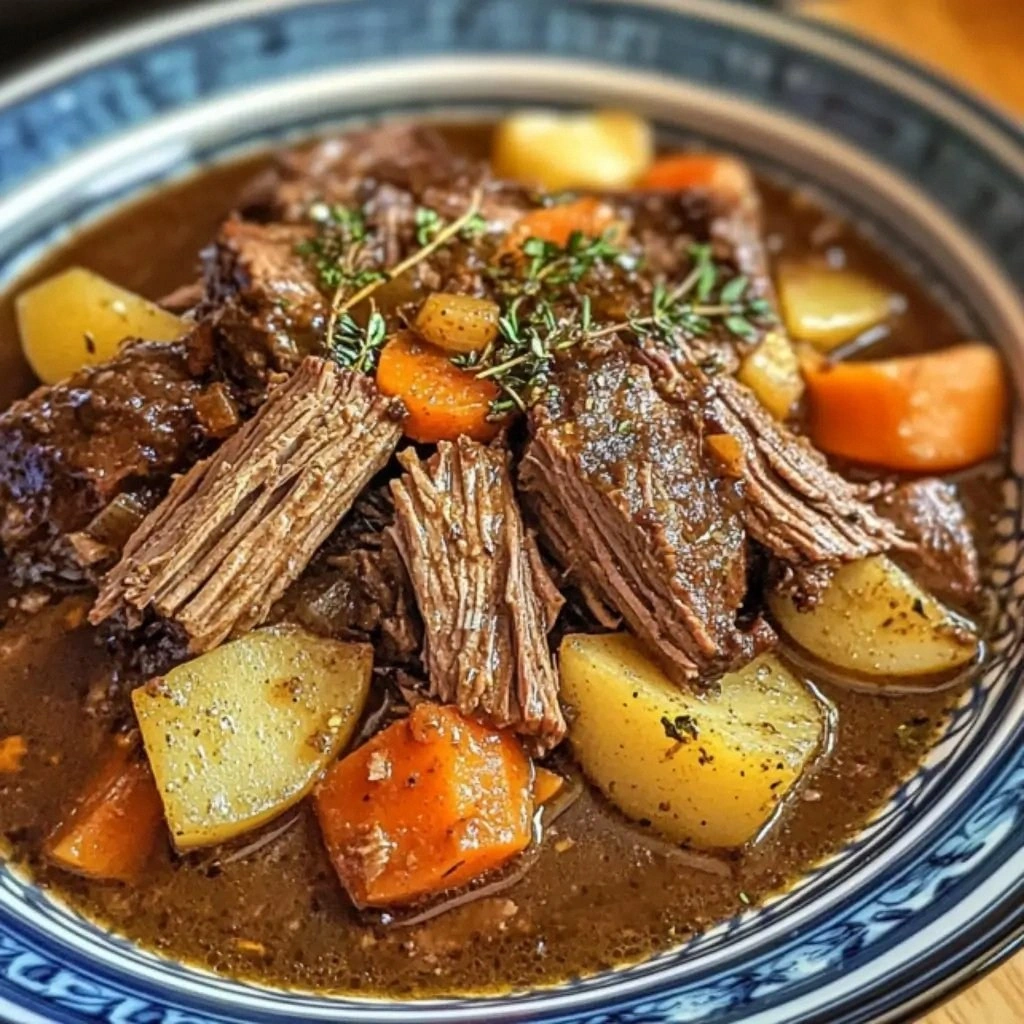
- Slice the roast against the grain into thin, even slices. Serving the meat against the grain maximizes tenderness and makes each bite feel like a cloud. Plate the roast with the vegetables and ladle the thickened gravy over the top.
That’s it—you did it. But hold on, I’ve got a few more tricks that will take this to another level. These insider tips are the secret sauce that turns a good pot roast into an unforgettable culinary experience.
Insider Tricks for Flawless Results
The Temperature Rule Nobody Follows
Many home cooks assume that the low setting on a slow cooker is always the best. The truth is, cooking on medium for the first 2 hours can help the meat start breaking down before it gets too tender. I’ve found that a short burst of medium heat can create a firmer, more structured texture that holds up better when sliced.
Why Your Nose Knows Best
During the first hour of cooking, keep your nose in the kitchen. The aroma will evolve from a buttery, caramelized scent to a deep, savory bouquet. If you notice a sour or off smell, it could be a sign that the liquid has boiled over or the meat is starting to spoil. Trust your senses; they’re your best quality control.
The 5‑Minute Rest That Changes Everything
Resting the roast for exactly 5 minutes before slicing is a game changer. The juices redistribute, and the meat becomes more tender. Skipping this step can leave the meat dry and chewy. I’ve seen people cut straight from the pot and end up with a disappointing texture.
Use Fresh Herbs for a Burst of Color
Adding fresh thyme and rosemary at the very end of cooking keeps the herbs bright and aromatic. Dried herbs lose their potency over long cooking times, so fresh herbs give a more vibrant finish. A sprinkle of fresh parsley before serving also adds a pop of color and freshness.
Don’t Skimp on the Salt
Salt is the flavor enhancer that brings all the other ingredients together. Many people underestimate how much salt is needed for a slow‑cooked dish. A pinch of salt on the meat before searing, plus a sprinkle at the end of cooking, can make the difference between a bland and a bold dish.
Creative Twists and Variations
This recipe is a playground. Here are some of my favorite ways to switch things up:
Herb‑Infused Roast
Swap the dried herbs for a bouquet garni of fresh rosemary, thyme, and bay leaves. Tie them together with kitchen twine so you can easily remove them before serving. The result is a more aromatic, herbaceous flavor profile that feels like a fresh garden garden.
Spicy Jalapeño Kick
Add sliced jalapeños or a dash of hot sauce during the last hour of cooking. The heat will mingle with the savory gravy, creating a spicy, comforting dish. This variation is perfect for those who like a little fire in their food.
Sweet & Smoky Barbecue Twist
Replace the red wine with a smoky barbecue sauce and add a splash of apple cider vinegar. The sweetness of the sauce balances the smoky undertones, while the vinegar adds a bright finish. Serve over mashed potatoes for a sweet, smoky comfort meal.
Vegetarian Beef‑Free Version
Use a plant‑based chuck roast substitute, such as seared tempeh or a hearty mushroom roast. Follow the same steps, but reduce the cooking time to 4 hours on low. The result is a savory, satisfying vegetarian main dish that mimics the classic flavor.
Asian‑Inspired Twist
Replace the beef broth with a combination of soy sauce and mirin. Add sliced ginger, sliced scallions, and a splash of sesame oil at the end. The dish will have a sweet, umami, and slightly sweet flavor reminiscent of a hearty ramen bowl.
Cheesy Pot Roast
During the last 15 minutes of cooking, sprinkle shredded cheddar or Gruyère cheese over the roast. The cheese will melt into the gravy, creating a creamy, indulgent finish. Serve over buttery mashed potatoes to balance the richness.
Storing and Bringing It Back to Life
Fridge Storage
Cool the pot roast to room temperature before refrigerating. Store it in an airtight container for up to 4 days. The gravy will thicken slightly in the fridge, so add a splash of beef broth or water before reheating to restore its original consistency.
Freezer Friendly
Pack the roast, vegetables, and gravy separately in freezer‑safe containers. Label each with the date and store for up to 3 months. Thaw overnight in the refrigerator before reheating on the stovetop or in the slow cooker on low.
Best Reheating Method
Reheat the roast and gravy in a saucepan over low heat, stirring occasionally. Add a splash of water or broth to keep the sauce from drying out. Let it simmer for 10 minutes, then serve with fresh herbs for an extra burst of flavor.
Now that you’ve mastered the core recipe, let’s dive into a few more paragraphs that will keep you engaged and inspired. The next section will explore how to pair this pot roast with the perfect side dishes, creating a meal that’s both balanced and unforgettable. We’ll also talk about plating techniques that elevate the presentation to a gallery‑ready level.
When you plate the roast, arrange the sliced meat in a fan shape on the plate. Scatter the vegetables around it like a colorful mosaic. Drizzle the thickened gravy in a slow, deliberate stream that glistens like liquid gold. The visual impact of this plating technique can make even a simple dish feel like a culinary masterpiece. It’s all about the little details that elevate the experience.
Pairing the pot roast with a side of buttery mashed potatoes or creamy polenta creates a comforting, hearty meal that satisfies the soul. A crisp green salad with a tangy vinaigrette adds a refreshing contrast, balancing the richness of the dish. If you’re in the mood for something more adventurous, serve it with a side of roasted root vegetables glazed in honey and thyme.
For a dessert that complements the savory flavors, consider a simple apple crisp or a classic bread pudding. The sweetness of the dessert will cleanse the palate after the rich, umami‑filled pot roast. A glass of full‑bodied red wine or a robust coffee will finish the meal on a high note, leaving you craving another bite.
Finally, remember that cooking is an art, not a science. Feel free to adjust the seasonings, experiment with different vegetables, or even try a different cut of meat. The beauty of this slow‑cooker pot roast is its adaptability, allowing you to tailor it to your taste preferences and dietary needs. Keep experimenting, keep sharing, and most importantly, keep enjoying the process.
And there you have it—your ultimate guide to the slow‑cooker pot roast that will become a staple in your kitchen. From the initial sear to the final plating, every step is designed to maximize flavor and tenderness. Now, grab your skillet, your slow cooker, and let’s create some culinary magic together. Happy cooking!