I’ve always loved the idea of stuffing as a side dish, but every time I tried a classic recipe, it felt like a bland, beige backdrop to the main course. One autumn evening, after a kitchen mishap that left me with a burnt, soggy loaf of bread and a sausage that tasted like it had been left in the back of the fridge for a month, I swore I’d find a way to turn stuffing into a showstopper. The moment the sizzling sausage hit the pan, the kitchen filled with a savory, almost intoxicating aroma that made the air taste like a promise of comfort. I was determined to create a stuffing that would make people gasp, laugh, and demand seconds—because if you’re going to serve stuffing, you might as well make it unforgettable. The secret? A bold, smoky sausage, fresh sage that sings, and a touch of butter that turns the top into a golden, crackling crown. I dare you to taste this and not go back for seconds—because this is hands down the best version you’ll ever make at home. Picture yourself pulling this out of the oven, the whole kitchen smelling incredible, and the family gathering around the table with wide eyes and hungry smiles. Let me walk you through every single step—by the end, you’ll wonder how you ever made it any other way.
What Makes This Version Stand Out
- Bold Flavor: The sausage isn’t just a filler; it’s the backbone, delivering a savory punch that pairs perfectly with sage’s earthy aroma.
- Textural Contrast: Each bite offers a satisfying crunch from celery, a tender bite from bread, and a buttery, crisp top that shatters like thin ice.
- Simple Prep: No complicated marinades or secret sauces—just a handful of high‑quality ingredients and a few quick steps.
- Ingredient Integrity: By using fresh sage and real chicken broth, the dish feels homemade, not store‑bought.
- Crowd‑Pleaser: Even the most skeptical palates will be won over by the aromatic, comforting profile.
- Make‑Ahead Friendly: The stuffing can be assembled days before, refrigerated, and baked right before serving without losing its magic.
- Versatility: Swap pork sausage for turkey or a plant‑based option, and you’re instantly catering to different dietary needs.
- Visual Appeal: The golden top and glossy sheen of the broth give it a restaurant‑level finish.
Alright, let's break down exactly what goes into this masterpiece. Every ingredient is chosen for its role in creating layers of flavor, texture, and aroma that dance together in each bite.
Inside the Ingredient List
The Flavor Base
Sausage is the heart of this stuffing. I prefer a savory pork sausage with a moderate spice level—its fat content keeps the mixture moist while the spices add depth. If you’re watching calories or prefer a leaner option, a turkey sausage works just as well, though the flavor profile shifts slightly toward a cleaner taste. Plant‑based sausages are a modern twist; choose one that’s pre‑seasoned to avoid extra salt.
Onion is the sweet and savory foundation. When chopped finely, it releases a subtle sweetness that balances the richness of the sausage. If you’re not a fan of raw onion, sauté it until translucent before adding it to the pan; the caramelization will deepen the flavor. A pinch of salt during the sauté helps draw out moisture and intensifies the onion’s natural sweetness.
Celery provides a crisp, refreshing bite that cuts through the heaviness of the sausage and butter. It also adds a green note that brightens the dish’s overall profile. If you’re short on fresh celery, frozen chopped celery is a quick substitute—just thaw and squeeze out excess water.
The Unexpected Star
Fresh sage is the star of the show. Its earthy aroma and slightly peppery flavor elevate the stuffing from ordinary to extraordinary. Sage pairs beautifully with both pork and turkey, but its boldness can stand alone in a vegetarian version when combined with mushroom or lentil “sausage.” Use whole leaves; they release flavor gradually and can be removed before serving for a cleaner finish.
Dried thyme is a supporting actor that adds subtle depth. A pinch is all you need; too much can overpower sage. If you’re using dried thyme, toast it briefly in the pan with the sausage to unlock its essential oils.
The Texture Crew
Cubed bread is the backbone of the stuffing. I recommend using a day‑old loaf—either white, whole grain, or gluten‑free—to ensure the cubes absorb the broth without becoming mushy. If you’re using fresh bread, toast it lightly first to give it a firm structure. The bread’s starches also help thicken the broth as it cooks, creating a cohesive mixture.
Butter is the finishing touch that gives the top a golden, crispy finish. It also enriches the overall flavor profile, making each bite feel indulgent. Melt the butter separately and drizzle it over the top just before baking to preserve its glossy sheen.
The Final Flourish
Chicken broth is the liquid that binds everything together. It infuses the bread cubes with moisture and flavor, ensuring the stuffing stays tender. For a vegetarian version, vegetable broth works just as well, but consider adding a splash of mushroom broth for umami depth.
Salt and pepper are essential for seasoning. Start with a light hand—taste as you go. Remember, the broth and sausage already contain sodium, so you don’t want to overdo it. Freshly ground pepper adds a subtle heat that complements the sage’s earthiness.
Everything’s prepped? Good. Let’s get into the real action.
The Method — Step by Step
- Heat a large skillet over medium heat and add the sausage, breaking it apart with a wooden spoon. Cook until the sausage is browned and fully cooked, about 5–6 minutes. The sizzling sound is a promise of the savory depth to come. Don’t rush; let the fat render out for maximum flavor.
- Add the chopped onion and celery to the skillet with the sausage. Sauté until the onion is translucent and the celery is slightly softened, about 4 minutes. The aroma of caramelizing onion will fill the kitchen and set the stage for a comforting meal. Keep the mixture moving to prevent sticking.
- Stir in the dried thyme and fresh sage leaves. The herbs should release their oils and perfume the pan. This is the moment of truth—watch the steam rise and know you’re on the right track. If you like a stronger sage flavor, add a second leaf.
- Add the cubed bread to the skillet, stirring to coat each cube with the sausage, onion, and herb mixture. Let the bread toast slightly for 2 minutes, then pour in the chicken broth. The bread should absorb the liquid, but avoid over‑saturating; you want a moist but not soggy stuffing.
- Season with salt and pepper to taste. Stir everything together until evenly distributed. The mixture should smell toasty and fragrant—if not, let it cook another minute to allow flavors to meld.
- Transfer the stuffing mixture to a greased baking dish. Smooth the top with a spatula to ensure even baking. This is the stage where the dish transforms from a pan to a centerpiece.
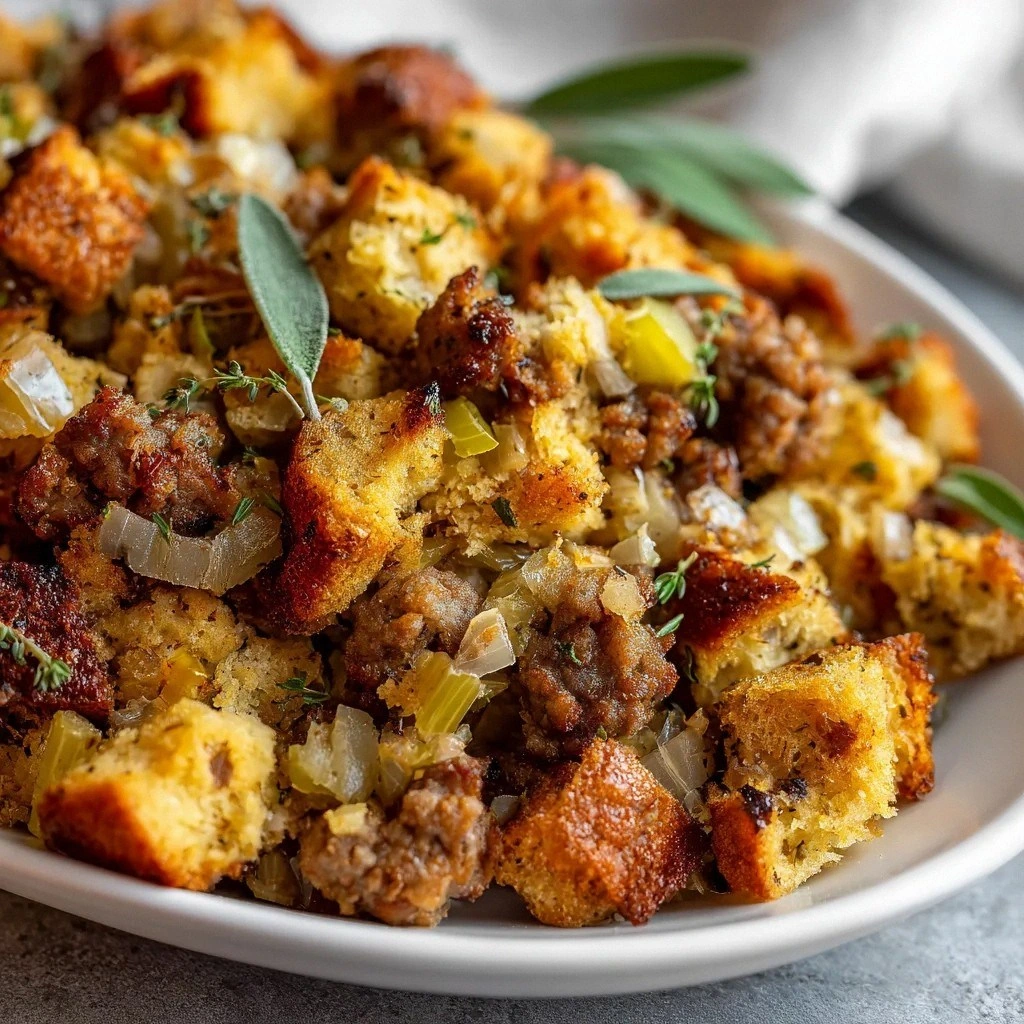
- Bake in the preheated oven for 25–30 minutes, or until the top is golden brown and the stuffing is heated through. If you prefer an extra crispy finish, broil for the last 2 minutes, watching closely to avoid burning. The final product should have a golden crust that crackles when you touch it.
- Let the stuffing rest for 5 minutes before serving. This allows the flavors to settle and the juices to redistribute. Serve hot, and watch everyone reach for seconds—this is the kind of dish that turns a meal into a memory.
That's it—you did it. But hold on, I've got a few more tricks that'll take this to another level. These insider tips will ensure every bite is a masterpiece, whether you’re cooking for a crowd or a cozy dinner.
Insider Tricks for Flawless Results
The Temperature Rule Nobody Follows
Many people bake stuffing at 350°F, but 375°F gives that perfect golden crust without drying out the interior. The higher temperature also ensures the butter melts evenly across the top, creating a glossy finish. If you’re baking in a larger dish, keep an eye on the center; you may need to cover it with foil for the last 10 minutes to prevent over‑browning.
Why Your Nose Knows Best
Before adding the broth, let the sausage, onion, and celery sizzle for a minute longer. The aroma will intensify, giving you a clear signal that the base is ready. If the smell is too sharp, let it cook a bit more; if it’s too mild, add a splash of broth to wake up the flavors.
The 5‑Minute Rest That Changes Everything
After baking, let the stuffing sit for exactly five minutes. During this rest, the steam redistributes, and the top crispens slightly, making the texture more cohesive. A common mistake is cutting into it immediately, which can cause the crumb to collapse. Patience pays off.
Don’t Over‑Season Until the Last Moment
Taste the mixture before baking and season lightly. The broth and sausage already contribute sodium, and the oven will concentrate flavors. Adding too much salt early can lead to a salty bite. Adjust at the end if needed.
Use a Mix of Bread Types for Depth
Combine a slice of sourdough with a slice of whole‑grain bread for a complex flavor profile. The sourdough adds tang, while whole‑grain brings earthiness. This mix also balances textures, giving you a crisp bite with each mouthful.
Keep the Butter Warm
Melt the butter just before drizzling it over the top. Warm butter spreads more evenly, ensuring a uniform golden crust. Cold butter can create uneven spots and a greasy finish. A quick splash of warm butter at the end can revive a slightly dry batch.
Creative Twists and Variations
This recipe is a playground. Here are some of my favorite ways to switch things up:
Maple‑Glazed Sausage Stuffing
Swap regular sausage for maple‑glazed or add a tablespoon of pure maple syrup to the pan. The sweetness balances the savory notes, creating a fall‑season favorite. Serve with a side of roasted sweet potatoes for a cohesive theme.
Mushroom & Lentil Vegan Stuffing
Replace sausage with sautéed mushrooms and lentils for a hearty, plant‑based version. Use vegetable broth and a splash of soy sauce for umami. This variation is perfect for a holiday feast that caters to all guests.
Spicy Chipotle Sausage Stuffing
Add a diced chipotle pepper or a teaspoon of chipotle powder to the sausage mixture. The smoky heat pairs beautifully with sage and thyme. Great for those who like a little kick in their comfort food.
Cheesy Parmesan Crunch
Stir in 1/2 cup grated Parmesan before baking, and top the final layer with a sprinkle of breadcrumbs. The cheese melts into the stuffing, adding a creamy depth, while the breadcrumbs provide a crunchy contrast. This version feels indulgent without being overpowering.
Herb‑Infused Bread
Before cubing, toss bread slices with olive oil and chopped rosemary or thyme. The herbs infuse the bread with aromatic oils, elevating each bite. It’s a simple tweak that transforms the flavor profile.
Apple & Walnut Stuffing
Dice a small apple and sauté it with the onion and celery. Fold in a handful of toasted walnuts for crunch. The sweet apple and nutty texture create a festive, autumnal twist.
Storing and Bringing It Back to Life
Fridge Storage
Cool the stuffing completely, then transfer it to an airtight container. Store in the refrigerator for up to 2 days. When reheating, sprinkle a splash of water and cover loosely to keep it from drying out. A quick 5‑minute bake at 350°F will revive the crisp top.
Freezer Friendly
Place the cooled stuffing in a freezer‑safe bag, removing as much air as possible. It can be frozen for up to 3 months. Thaw overnight in the refrigerator, then reheat in a preheated oven at 350°F for 20 minutes, topping with a little butter to restore crunch.
Best Reheating Method
The secret to a great reheated stuffing is moisture. Add a tablespoon of broth or water, cover with foil, and bake at 300°F until heated through. The foil traps steam, preventing the stuffing from becoming dry. Finish with a quick drizzle of melted butter for that signature buttery shine.