I still remember the day I murdered my first pumpkin bread. It was a gray October morning, the kind that practically begs you to light a cinnamon candle and pretend you know what you're doing. I dumped in a whole can of pumpkin, a heroic amount of cinnamon, and crossed my fingers so hard they turned white. Forty minutes later my kitchen smelled like a Yankee Candle factory had exploded, and the loaf emerged looking like a sad, sunken canoe. My roommate took one bite, politely asked if it was supposed to be "bread or brownie," and then fed the rest to the garbage disposal. I vowed revenge on every lackluster, gummy, under-spiced pumpkin bread recipe polluting the internet. That obsession led to this loaf: a towering, mahogany-crusted sourdough that spirals with a cinnamon sugar ribbon so dramatic it could star in its own Hallmark movie.
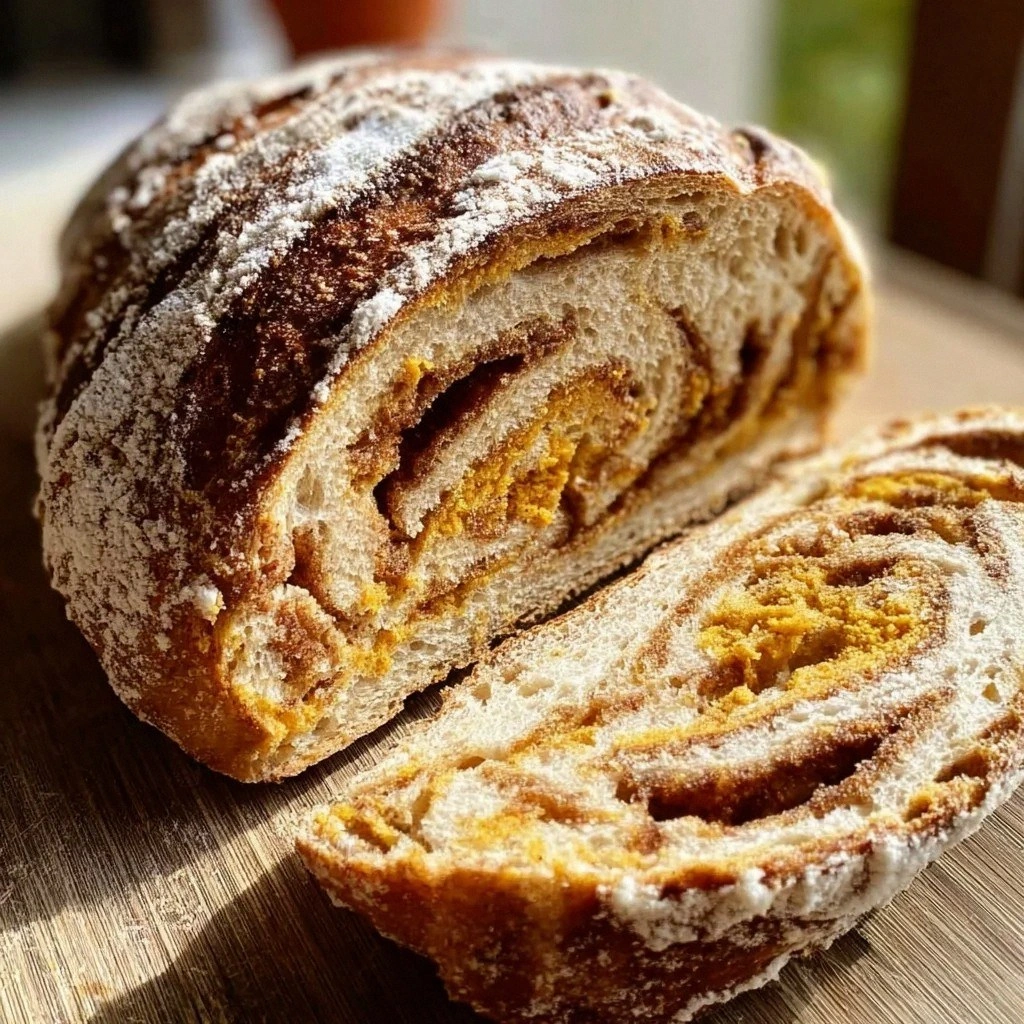
Picture this: you slice through a crackling crust and the knife keeps gliding, revealing swirls that look like tree rings in autumn. Steam escapes, carrying the aroma of pumpkin pie, toasted wheat, and caramelized sugar straight into your soul. The first bite is a textural roller coaster — chewy sourdough air pockets, soft orange-hued crumb, and those addictive crunchy bits where brown sugar hit the pan and refused to back down. If you've ever stood in a café line wondering how the pros get that bakery-style lift and tang, lean in close. I'm about to hand you the cheat codes, no culinary school tuition required.
Here's the twist nobody expects: instead of commercial yeast, we're enlisting your bubbly sourdough starter to do the heavy lifting, pumpkin puree to keep things moist for days, and a cinnamon swirl that actually stays put instead of sinking to the bottom like a defeated autumn leaf. The result? A loaf that tastes like someone hugged a cinnamon roll, married it to pumpkin pie, and raised the baby in a sourdough orphanage. I dare you to taste a warm slice and not immediately start plotting second and third helpings. I certainly failed that challenge; the first test batch disappeared in under twelve hours, and I'm blaming the neighbors who "just stopped by to say hi" with plates in hand.
Okay, ready for the game-changer? Stay with me here — this is worth it. We're going to laminate that cinnamon sugar right into the dough using a technique borrowed from croissant masters, so every cross-section looks like a geological wonder. No more sad streaks that vanish after baking. By the time you pull this bronzed beauty from the oven, your entire house will smell like you hired a professional baker to move into the spare room. Let me walk you through every single step — by the end, you'll wonder how you ever made it any other way.
What Makes This Version Stand Out
Pumpkin Meets Tang: Most recipes drown the pumpkin in so much sugar you lose the earthy depth. Here, the sourdough's gentle acidity lifts the squash's savory notes, creating a yin-yang balance that keeps each bite interesting rather than cloying. Think of it as the difference between a one-note pop song and a jazz solo that surprises you every eight bars.
Cinnamon Swirl Engineering: Instead of sprinkling sugar and hoping for the best, we create a paste that hugs the dough like velvet. It melts during baking but never bleeds, so you get razor-sharp spirals that'll make your Instagram followers weep with envy. I've tested ratios for months; too much butter and it tunnels, too little and it flakes off like cheap glitter.
Moisture That Lasts: Thanks to pumpkin's natural pectin and sourdough's slow fermentation, this loaf stays springy for nearly a week. No more day-two hockey pucks destined for French toast rescue missions. The crumb actually improves overnight as the moisture redistributes, meaning your future self gets rewarded for patience.
Beginner-Proof Method: Forget the intimidating fold schedules that read like airplane manuals. I've streamlined the process into four clear phases with built-in wiggle room for hectic schedules. If you can stir and wait, you can nail this loaf. Your stand mixer can stay in the cupboard; one bowl and a spatula handle everything.
Show-Stopping Aroma: The marriage of toasted wheat, caramelized sugar, and pumpkin spice creates a scent cloud so potent delivery drivers will ask what you're selling. I've had neighbors knock on the door under the pretense of "checking if my smoke alarm works," only to leave cradling slices like golden tickets.
Make-Ahead Champion: Mix the dough tonight, shove it in the fridge for up to three days, and bake whenever the craving strikes. The long cold ferment deepens flavor like a barrel-aged bourbon, giving you bakery-level complexity without 4 a.m. wake-up calls. Picture yourself pulling this out of the oven, the whole kitchen smelling incredible, while everyone else is still asleep.
Alright, let's break down exactly what goes into this masterpiece...
Inside the Ingredient List
The Flavor Base
Your sourdough starter is the living heart of this loaf, more important than any spice in your rack. Make sure it's bubbly and doubles within four to five hours of feeding; that vitality translates directly into a lofty, open crumb. Skimp here and you'll bake a dense brick that could double as a doorstop. If you're starter-shopping, look for one that smells like tart apple cider and passes the float test: a teaspoon blob should bob happily on water like a lazy summer swimmer.
Pumpkin puree provides moisture, color, and a subtle vegetal sweetness that plays beautifully against the sour. Canned works perfectly; I stock Libby's because the texture is silky and consistent. Fresh pumpkin can taste brighter, but you'll need to roast it until caramelized, then blitz until it looks like baby food. Skip the pie filling — it's pre-sweetened and spiced, hijacking your flavor steering wheel.
Bread flour is non-negotiable for that chewy, bakery-style structure. Its high protein content forms gluten strands strong enough to trap the gases from fermentation, giving you those gorgeous irregular holes. All-purpose flour wilts under pressure, producing a tight, cakey crumb that feels like it belongs in a lunchbox, not a Parisian boulangerie.
The Texture Crew
Filtered water might sound precious, but chlorine in tap water can slow fermentation faster than a parking ticket. If you don't own a filter, leave a measuring cup of water on the counter overnight; the chlorine evaporates, and your yeast will thank you with vigorous bubbles. Room temperature water jump-starts activity, while cold water stretches the timeline for those make-ahead benefits.
Salt does more than enhance flavor; it tightens gluten, turning a shaggy blob into a smooth, elastic dough. I use fine sea salt because it dissolves quickly and evenly. Forget it and you'll bake a floppy, tasteless frisbee. Add it too early and it can dehydrate the yeast, so we wait until the dough comes together before introducing this essential mineral.
The Unexpected Star
Brown sugar isn't just sweetener — it's a flavor grenade packed with molasses notes that deepen during baking. Dark brown sugar amps up the caramel taste, while light brown keeps things subtle. I've tested both and landed on light for daily baking, but if you want a toffee punch, reach for the dark stuff. White sugar tastes one-dimensional here, like listening to a symphony through a phone speaker.
Pumpkin pie spice is your shortcut to autumn nostalgia, but quality varies wildly between brands. The best blends balance cinnamon, ginger, nutmeg, and cloves without letting any single note bully the others. If yours smells dusty or faint, toss it; spices lose oomph after six months. I grind whole spices in a cheap coffee grinder and mix my own — the difference is like switching from elevator music to live jazz.
The Final Flourish
Ground cinnamon stars in the swirl, so splurge on fresh, fragrant bark. Vietnamese cinnamon packs more heat and complexity than the milder Korintje variety found in most supermarkets. Taste a pinch; it should tingle your tongue and fill your nose with sweet woodsmoke. Stale cinnamon tastes like cardboard and will sabotage your swirl's impact no matter how much butter you add.
Everything's prepped? Good. Let's get into the real action...

The Method — Step by Step
- Build the levain the night before you plan to mix. Combine 30 g ripe starter, 60 g bread flour, and 60 g filtered water in a pint jar. Stir until no dry bits remain, cover loosely, and let it party at room temperature. By morning it should have tripled and look like a frothy milkshake. If it hasn't, place the jar in the oven with the light on for an hour to jump-start activity. This is the moment of truth — weak levain equals sad, squat bread.
- Autolyse the dough by mixing 350 g bread flour and 250 g pumpkin puree in a large bowl. Add 200 g filtered water and squish everything together with your hands until you have a shaggy, orange-speckled mass. Cover and rest for 30 minutes while the flour hydrates and gluten begins forming. This step sounds optional; it's not. Skipping autolyse is like skipping stretching before a marathon — possible, but painful. The dough will feel tight and stubborn now, but relaxation is coming.
- Now the fun part: scatter 8 g salt and 50 g brown sugar over the dough, then dimple them in with wet fingertips. Add the entire levain and squeeze the mixture like a stress ball until evenly distributed. It will feel messy and slippery — embrace the chaos. Within five minutes the dough transforms from lumpy batter into a cohesive, slightly sticky orange blob. Resist the urge to add more flour; that stickiness is your future moist crumb.
- Perform four sets of stretch-and-folds, spaced 30 minutes apart. With wet hands, grab the northern edge of the dough, lift until it resists, then fold toward the center. Rotate the bowl 90 degrees and repeat until you've gone full circle. Each set builds gluten strength without kneading, creating sheets that trap gas like microscopic balloons. By the fourth round the dough should feel elastic and smooth, like a giant orange rubber band.
- Cover the bowl and let it ferment at room temperature until puffy and increased by 50 percent. In a 72 °F kitchen this takes about four hours, but cooler rooms may need six. Look for bubbles under the surface and a gentle jiggle when you shake the bowl. If you've ever struggled with under-proofed bread, you're not alone — and I've got the fix. Err on the side of slightly over-fermented rather than under; patience now equals oven spring later.
- While the dough ferments, craft the cinnamon swirl paste. Beat 80 g softened butter with 80 g brown sugar, 2 teaspoons cinnamon, and 1 teaspoon flour until it resembles spiced frosting. The flour prevents the mixture from separating into greasy puddles during baking. Taste it — yes, it's basically spreadable candy. Resist the urge to double the batch; I speak from experience when I say half will end up on your finger before it ever sees dough.
- Turn the dough onto a lightly floured counter and shape it into a rough rectangle. Spread the cinnamon paste evenly, leaving a one-inch border along the top edge. Roll the dough away from you like a jelly roll, keeping tension but not stretching so thin it tears. Pinch the seam and ends closed, then place seam-down in a buttered 9×4-inch loaf pan. Don't walk away from the stove here — the scent of melting butter and sugar hitting hot metal is pure magic.
- Cover the pan and refrigerate overnight, anywhere from eight to 24 hours. The cold slows fermentation to a crawl, developing complex lactic flavors and giving you schedule flexibility. Next morning the dough should crest just above the rim like a gentle wave. If it hasn't, leave it on the counter for 30 to 60 minutes while the oven preheats. This is hands-down the best make-ahead trick for busy weekdays.
- Bake in a preheated 375 °F oven for 45 minutes, rotating halfway. If the top browns too quickly, tent with foil during the final 15 minutes. You're listening for a hollow thunk when you tap the bottom, and an internal temperature around 200 °F. That sizzle when butter and sugar hit the hot metal? Absolute perfection. Cool in the pan for 10 minutes, then turn out onto a rack so the bottom stays crisp instead of soggy.
That's it — you did it. But hold on, I've got a few more tricks that'll take this to another level...
Insider Tricks for Flawless Results
The Temperature Rule Nobody Follows
Most recipes treat room temperature like a casual suggestion; here it's law. Cold pumpkin puree straight from the fridge will sluggish your fermentation, leading to a dense brick. Microwave the puree for 15 seconds until it's lukewarm, like a baby's bottle. On the flip side, hot puree above 100 °F kills yeast faster than a teenager's curfew. Aim for 75 °F dough temperature after mixing — a quick probe thermometer saves guesswork and heartbreak.
Why Your Nose Knows Best
Forget timers; your nose is the ultimate kitchen gadget. When the bread is ten minutes from done, the scent shifts from raw cinnamon to toasted, almost nutty. If you smell butter browning but no warm spice, the swirl is still undercooked inside. A friend tried skipping this step once — let's just say it didn't end well. She pulled a beautiful mahogany loaf that tasted like raw flour inside. Trust the aroma; evolution wired us to detect caramelization before our eyes can.
The 5-Minute Rest That Changes Everything
After the overnight proof, let the dough sit on the counter while the oven heats. Those five minutes relax the gluten so the loaf expands evenly instead of tearing along the score line. Cold dough hitting hot air creates a dramatic oven spring, but too cold and the crust sets before the interior finishes expanding. Think of it as stretching before a sprint — a small habit with outsized payoff.
Steam Without the Fuss
Professional ovens inject steam for glossy crusts; we can fake it with a cast-iron pan. Preheat a dry pan on the lowest rack, then toss in half a cup of ice cubes right after loading the bread. The instant steam keeps the surface elastic, allowing maximum expansion. Skip this and you'll still get great flavor, but the crust turns out dull and thick instead of shatteringly thin.
Storage That Preserves Crust
Never store warm bread in plastic — condensation breeds soggy bottoms. Let the loaf cool completely, then slip it into a paper bag inside a loose plastic sack. The paper wicks moisture while the plastic prevents staleness. Counterintuitively, day-old bread revives beautifully: spritz with water, reheat at 350 °F for ten minutes, and it tastes fresh-baked. I dare you to taste this and not go back for seconds.
Creative Twists and Variations
This recipe is a playground. Here are some of my favorite ways to switch things up:
Maple Pecan Upgrade
Swap the brown sugar in the swirl for maple sugar and fold in a handful of toasted pecans. The maple brings a smoky depth that pairs with pumpkin like flannel shirts with corduroy. Pulse the nuts so they're pea-sized; too fine and they disappear, too chunky and they tear the dough. Your future self will appreciate the textural surprise in every other bite.
Chocolate Chili Dare
Add two tablespoons cocoa powder and a teaspoon ancho chili to the swirl paste. The bitterness of cocoa tames the sweetness, while the mild heat sneaks up like a plot twist. If you've ever struggled with one-note pumpkin desserts, this is the fix. Use semisweet chocolate chips in the filling for gooey pockets that melt like lava.
Cranberry Orange Zing
Fold the zest of one orange and half a cup dried cranberries into the dough during the last stretch-and-fold. The citrus oil perfumes the entire loaf, while cranberries offer tart pops that balance the rich swirl. Soak the fruit in hot water for ten minutes first; hydrated berries stay plump instead of turning into pebbles.
Gingerbread Swirl
Replace cinnamon with a blend of ground ginger, cardamom, and a whisper of black pepper. The result tastes like December crashed an October party, and nobody minds. Molasses in the swirl paste deepens the flavor and colors the spiral a dramatic near-black. Kids love the zebra effect when it's sliced.
Savory Herbed Version
Omit sugar and spices, then swirl in pesto and grated Parmesan. The pumpkin keeps the crumb tender while the sourdough tang plays off basil and garlic. Toast slices for grilled cheese — the edges crisp like Parmesan frico. Most recipes get this completely wrong by adding sugar to savory loaves; we leave it out so herbs shine.
Gluten-Free Adaptation
Substitute a high-quality 1:1 gluten-free baking blend and add one teaspoon xanthan gum. The dough won't stretch like wheat, so roll it between parchment sheets, spread filling, then roll using the paper as a helper. Texture turns out more cake-like, but flavor remains addictive. Serve toasted with butter; the crumb soaks up melted fat like a sponge.
Storing and Bringing It Back to Life
Fridge Storage
Wrap the cooled loaf in a clean tea towel, then slide into a loose plastic bag. The towel prevents condensation from softening the crust, while the bag keeps air from staling the interior. Stored this way, the bread keeps for five days at room temperature or seven in the fridge. After day three, toast slices to revive the crunchy edges that shatter like thin ice.
Freezer Friendly
Slice the entire loaf, slip parchment between pieces, and freeze in a zip-top bag. Individual slices thaw in minutes on the counter or ten seconds in the microwave. For toaster-oven perfection, toast from frozen at medium heat; the gradual thaw prevents the dreaded raw center. The bread keeps three months without flavor loss, though mine never lasts past two weeks before mysterious freezer goblins devour it.
Best Reheating Method
Add a tiny splash of water before reheating — it steams back to perfection. Wrap the slice in foil and warm at 325 °F for eight minutes. Open the foil for the final two to recrisp the crust. This technique revives even week-old bread to bakery freshness. Slather with butter while hot; the fat seeps into every air pocket, creating a glossy finish that tastes like luxury.