I still remember the night I tried to make a quick dinner for my friends after a marathon of late‑night streaming. I was juggling a half‑filled pantry, a flickering stove, and a craving that felt like a siren calling me to the kitchen. The moment I poured that first splash of coconut milk into the pan, the kitchen filled with a sweet, nutty aroma that made me forget the chaos outside. I was about to admit defeat when the green curry paste hit the oil, releasing a burst of green, almost neon, steam that painted the walls with a promise of adventure. If you’ve ever felt that sudden spark of culinary curiosity, you’ll understand why I’m so excited to share this exact version of savory chicken green curry.
Picture this: the pan is a canvas, the chicken thighs a bold, meaty splash of color, and the green curry paste a paintbrush dripping with herbs, chilies, and lemongrass. The sizzle is music—each crackle a note in a symphony that ends with a gentle, silky drizzle of coconut milk. The steam curls around the room like a fragrant cloud, and the first spoonful is a velvet‑smooth blend of heat, sweetness, and umami that lingers on the palate. I dare you to taste this and not go back for seconds—once you’ve had it, there’s no going back to bland or over‑cooked curries. This is hands down the best version you'll ever make at home, and it’s so simple you’ll wonder why you haven’t tried it sooner.
What makes this recipe a standout is the harmony between fresh ingredients and a technique that preserves every nuance of flavor. I’ve spent countless hours tweaking ratios, testing different cuts of meat, and experimenting with the timing of the coconut milk addition. The result is a dish that is both comforting and adventurous, with a depth that comes from balancing the earthy tones of the curry paste with the bright citrus of lime and the fragrant bite of basil. I’ll be honest—when I first tasted it, I ate half the batch before anyone else got to try it, and that’s because the flavor is so addictive it pulls you in. If you’ve ever struggled with a curry that ends up too thick or too thin, you’re not alone—and I’ve got the fix.
The secret lies in the timing and the layering of flavors. The initial sear of the chicken locks in juices, the sautéing of the curry paste releases essential oils, and the gentle simmer of coconut milk creates a silky sauce that coats each piece of chicken like velvet. The brown sugar balances the heat with a subtle sweetness, while the fish sauce adds a savory depth that can’t be replicated by soy sauce alone. The final flourish of basil and lime wedges gives the dish a bright, almost citrusy finish that cuts through the richness of the coconut. Picture yourself pulling this out of the stove, the whole kitchen smelling incredible, and then watching your guests’ eyes widen as they take that first bite.
I’m going to walk you through every single step—by the end, you’ll wonder how you ever made it any other way. From selecting the right chicken thighs to mastering the balance of sweet, salty, and spicy, this recipe is a masterclass in flavor. I’ll share the micro‑challenges that will test your skills, the bold claims that will change the way you think about curry, and the tiny hacks that will save you time and frustration. Let’s dive in and turn a simple pot of green curry into a culinary triumph that you’ll brag about for years.
What Makes This Version Stand Out
- Flavor Depth: Every ingredient is carefully chosen to create layers of taste that evolve with each bite. The green curry paste’s blend of chilies, lemongrass, and kaffir lime leaves forms a complex base that is both aromatic and vibrant.
- Texture Balance: The chicken thighs remain tender and juicy, thanks to the precise searing technique. The sauce is silky without being heavy, allowing the vegetables to stay crisp.
- Ingredient Quality: Using fresh, high‑quality ingredients—especially the curry paste and coconut milk—makes the difference between a good dish and a great one.
- Time Efficiency: The entire process takes less than 45 minutes, making it ideal for busy weeknights without sacrificing flavor.
- Versatility: The recipe adapts to any vegetables you have on hand, from bell peppers to snow peas, giving you endless creative options.
- Make‑Ahead Potential: The curry’s flavors only deepen, so you can prep it the night before and reheat it the next day for a quick, restaurant‑style dinner.
- Crowd Appeal: Whether you’re feeding a family or hosting a dinner party, the dish is sure to impress even the most skeptical foodies.
- Minimal Cleanup: With just one pan and a few utensils, you’ll spend less time washing dishes and more time enjoying the meal.
Alright, let's break down exactly what goes into this masterpiece...
Inside the Ingredient List
The Flavor Base
The green curry paste is the heart of this dish, delivering a punch of heat and aromatic herbs. It’s a blend of green chilies, lemongrass, galangal, and kaffir lime leaves that gives the curry its signature green hue. If you skip this paste, the dish loses its depth; it becomes a flat, one‑dimensional sauce. For a milder version, reduce the amount to 2 tablespoons, but be sure to keep the balance with the other flavors.
The Texture Crew
The chicken thighs, chosen for their marbling and tenderness, provide a juicy foundation. The 1‑pound portion is sliced into bite‑sized pieces, ensuring even cooking and a satisfying bite. If you prefer leaner meat, substitute boneless, skinless chicken breasts, but be aware they may dry out faster. A quick marination in a splash of soy sauce and a pinch of cornstarch helps keep the meat tender.
The Unexpected Star
The coconut milk is the creamy backbone that balances the heat from the paste. Opt for full‑fat coconut milk for a richer sauce, but you can use light coconut milk if you’re watching calories. The key is to let it simmer gently so it doesn’t break or separate. If you’re feeling adventurous, add a splash of Thai coconut cream for an even silkier texture.
The Final Flourish
Fresh Thai basil and lime wedges are the finishing touches that elevate the dish from good to unforgettable. The basil’s peppery undertones contrast the sweetness of the coconut, while the lime adds a bright, acidic kick that cuts through the richness. If you’re out of basil, try a handful of fresh cilantro for a different but still delicious aroma. The lime wedges also double as a garnish, adding a pop of color and a burst of citrus on the plate.
Everything's prepped? Good. Let's get into the real action...
The Method — Step by Step
- Heat a large skillet over medium‑high heat and add 2 tablespoons of olive oil. Allow the oil to shimmer but not smoke, which indicates the right temperature. This initial sear is crucial for locking in juices and creating a caramelized crust on the chicken. Once the oil is hot, add the sliced chicken thighs, spreading them in a single layer to avoid overcrowding. Let them cook undisturbed for 3–4 minutes before flipping; this ensures a golden exterior.
- After the first sear, remove the chicken from the pan and set it aside on a plate. This prevents the chicken from overcooking while you work on the sauce. The aroma of seared meat will linger, adding a savory backdrop to the next steps. When you’re ready to resume, return the chicken to the pan, reserving the juices in the pan for flavor.
- Reduce the heat to medium and add 3 tablespoons of green curry paste to the same pan. Stir constantly for 2–3 minutes, letting the paste bloom and release its essential oils. The sizzling sound you hear is a sign that the paste is cooking properly. If the paste starts to burn, lower the heat and add a splash of water to keep it from scorching.
- Pour in 1 can of coconut milk, whisking to combine with the curry paste. Bring the mixture to a gentle simmer, allowing the flavors to meld. The sauce should thicken slightly but remain pourable; if it thickens too much, add a tablespoon of water to loosen it. Keep an eye on the consistency—this is where the sauce can become too heavy if left unattended.
- Stir in 1 tablespoon of brown sugar and 1 tablespoon of fish sauce. The sugar balances the heat, while the fish sauce adds umami depth. Taste the sauce after adding these, adjusting the seasoning if necessary. You want a harmonious blend of sweet, salty, and spicy, not a single dominant flavor.
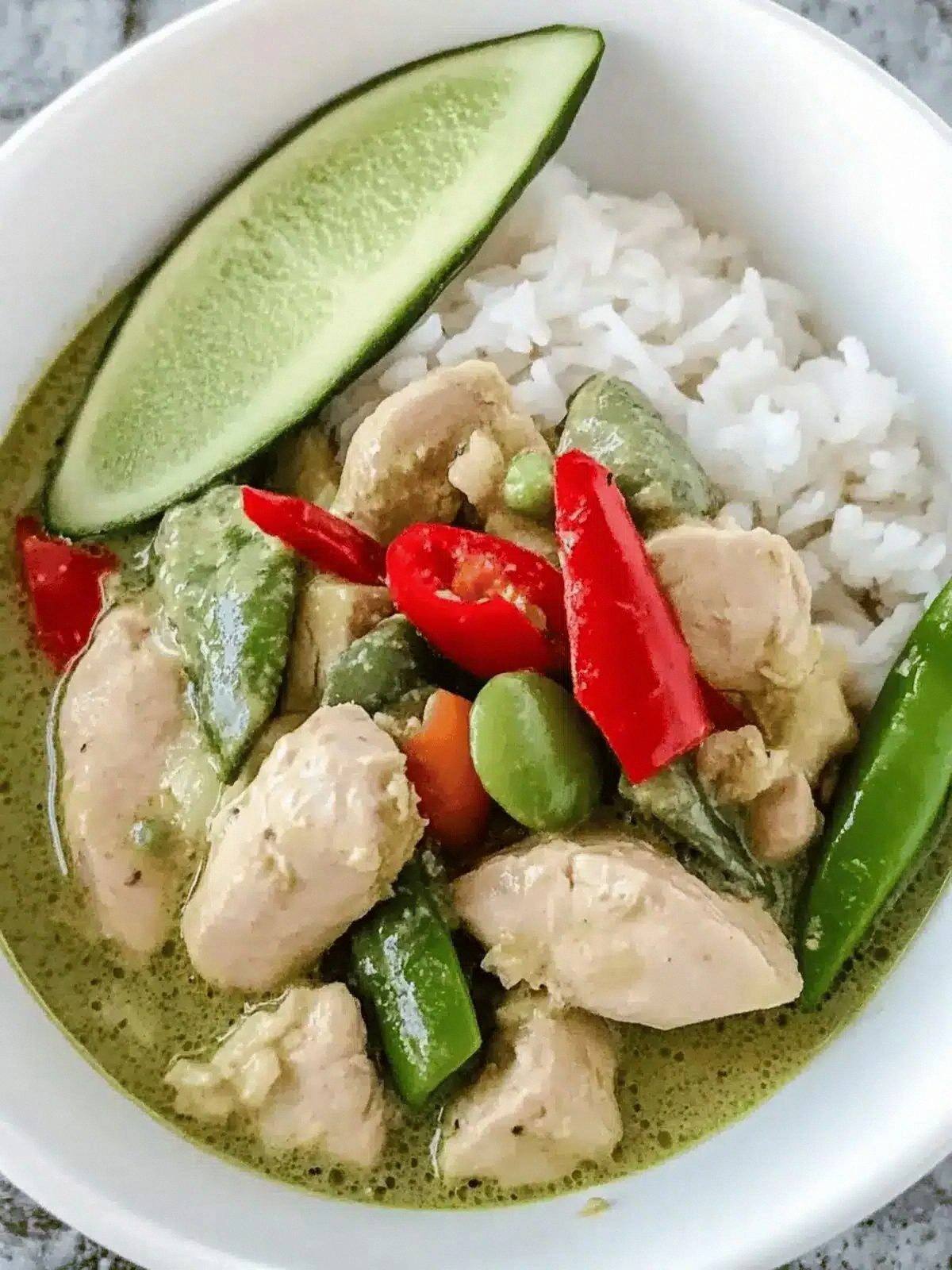
- Add 3 cups of your chosen vegetables—bell peppers, snow peas, carrots, or a mix of all. Stir to coat them evenly in the sauce, then cover the pan with a lid. Let the vegetables steam in the sauce for 4–5 minutes, or until they’re just tender but still retain a slight crunch. The lid helps trap steam, cooking the vegetables faster and preserving their color.
- Return the chicken to the pan, nestling it among the vegetables. Reduce the heat to low and let everything simmer together for another 5 minutes, allowing the flavors to fully integrate. This final simmer also ensures the chicken is cooked through and the sauce has thickened to a silky consistency.
- Just before serving, stir in 1/4 cup of fresh Thai basil leaves. The basil wilts instantly, releasing a fragrant steam that enhances the aroma. Squeeze the juice of 2 lime wedges over the curry, adding a bright, citrusy finish that cuts through the richness. Plate the curry over 2 cups of steamed jasmine rice, letting the rice soak up the sauce.
- Serve immediately, garnishing with extra basil leaves and lime wedges on the side. The dish should feel warm and inviting, with the sauce coating each piece of chicken like velvet. The steam that rises from the plate is a promise of comfort and flavor. If you’re hosting, pair it with a chilled glass of Thai iced tea for a complete experience.
That's it— you did it. But hold on, I've got a few more tricks that'll take this to another level. The next section is all about insider tips that will make your curry even more memorable.
Insider Tricks for Flawless Results
The Temperature Rule Nobody Follows
Many cooks think that a high heat is the key to a great curry, but the truth is that low, steady heat preserves the integrity of the coconut milk and the delicate spices. Cooking the sauce at a gentle simmer allows the flavors to meld without scorching the curry paste. If you’re in a hurry, you can briefly bring it to a boil, but then you must lower the heat immediately to maintain texture.
Why Your Nose Knows Best
Smell is the most reliable indicator of doneness in curries. When the aroma shifts from raw to fragrant, the sauce has reached its peak. If the scent is too sharp, the curry may still be too raw; if it’s too sweet, it might be overcooked. Trust your nose—it’s a seasoned chef’s secret weapon.
The 5-Minute Rest That Changes Everything
After you remove the curry from heat, let it rest for 5 minutes before serving. During this rest period, the flavors continue to develop and the sauce slightly thickens, resulting in a richer taste. This trick also allows the chicken to reabsorb some of the juices, keeping it moist.
The Secret Ingredient Swap
If you’re craving a different flavor profile, replace the green curry paste with red curry paste for a spicier kick, or use yellow curry paste for a milder, sweeter taste. Each paste brings its own unique blend of herbs and spices, so experiment to find your favorite. Just adjust the amount of fish sauce and sugar to balance the new flavor.
The Rice‑Sauce Ratio
Serve the curry over jasmine rice that’s been cooked with a splash of coconut milk. This infuses the rice with a subtle coconut flavor, making each bite a harmonious blend. If you prefer plain rice, add a pinch of salt and a drizzle of olive oil to keep the grains fluffy.
The Quick Heat‑Off Trick
If you accidentally overcook the curry, a quick splash of lime juice and a handful of fresh basil can revive the dish. The acidity cuts through excess richness, while the basil adds a fresh burst of flavor. This is a lifesaver for those moments when the sauce gets too thick.
Creative Twists and Variations
This recipe is a playground. Here are some of my favorite ways to switch things up:
Coconut‑Creamed Spinach Variation
Swap the standard vegetables for a handful of fresh spinach, letting it wilt in the sauce for the last 2 minutes. The spinach adds a green, earthy depth that complements the curry’s brightness. Serve over cauliflower rice for a low‑carb option.
Thai Peanut Crunch
Fold in a tablespoon of creamy peanut butter at the end of cooking for a nutty, savory layer. Add chopped roasted peanuts for crunch and a splash of lime for acidity. This version pairs beautifully with a side of cucumber salad.
Spicy Pineapple Twist
Add diced pineapple during the last 3 minutes of simmering for a sweet, tropical flare. The pineapple’s natural sugars balance the heat, while the acidity adds a zesty finish. This variation is perfect for summer gatherings.
Lemon‑Herb Chicken
Replace the lime wedges with fresh lemon zest and juice for a citrusy brightness that’s slightly sharper. Pair with roasted asparagus or broccoli for a balanced plate. This version is especially satisfying during the cooler months.
Mushroom Medley
Add sliced shiitake or cremini mushrooms along with the vegetables for an earthy umami boost. The mushrooms absorb the sauce’s flavors, turning every bite into a savory delight. Serve over sautéed spinach for added nutrition.
Vegan Version
Swap the chicken for tofu or tempeh, marinating in soy sauce and a pinch of cornstarch to get a crispy exterior. Use a plant‑based coconut milk and ensure the curry paste is vegan‑friendly. This version maintains the same depth of flavor while keeping it plant‑based.
Storing and Bringing It Back to Life
Fridge Storage
Store the curry in an airtight container for up to 4 days in the refrigerator. The sauce’s coconut base helps keep it fresh, and the spices preserve flavor. When ready to eat, reheat gently on the stove or in a microwave, stirring occasionally.
Freezer Friendly
The curry freezes well for up to 3 months. Divide it into portion‑size containers, leaving a little headspace to allow expansion. Thaw overnight in the refrigerator and reheat on the stove, adding a splash of water if the sauce has thickened.
Best Reheating Method
Reheat the curry on low heat, stirring frequently, and add a tiny splash of water or coconut milk to restore the original silky texture. Avoid high heat, which can break the sauce and cause separation. A gentle simmer will bring the dish back to its freshly cooked glory.