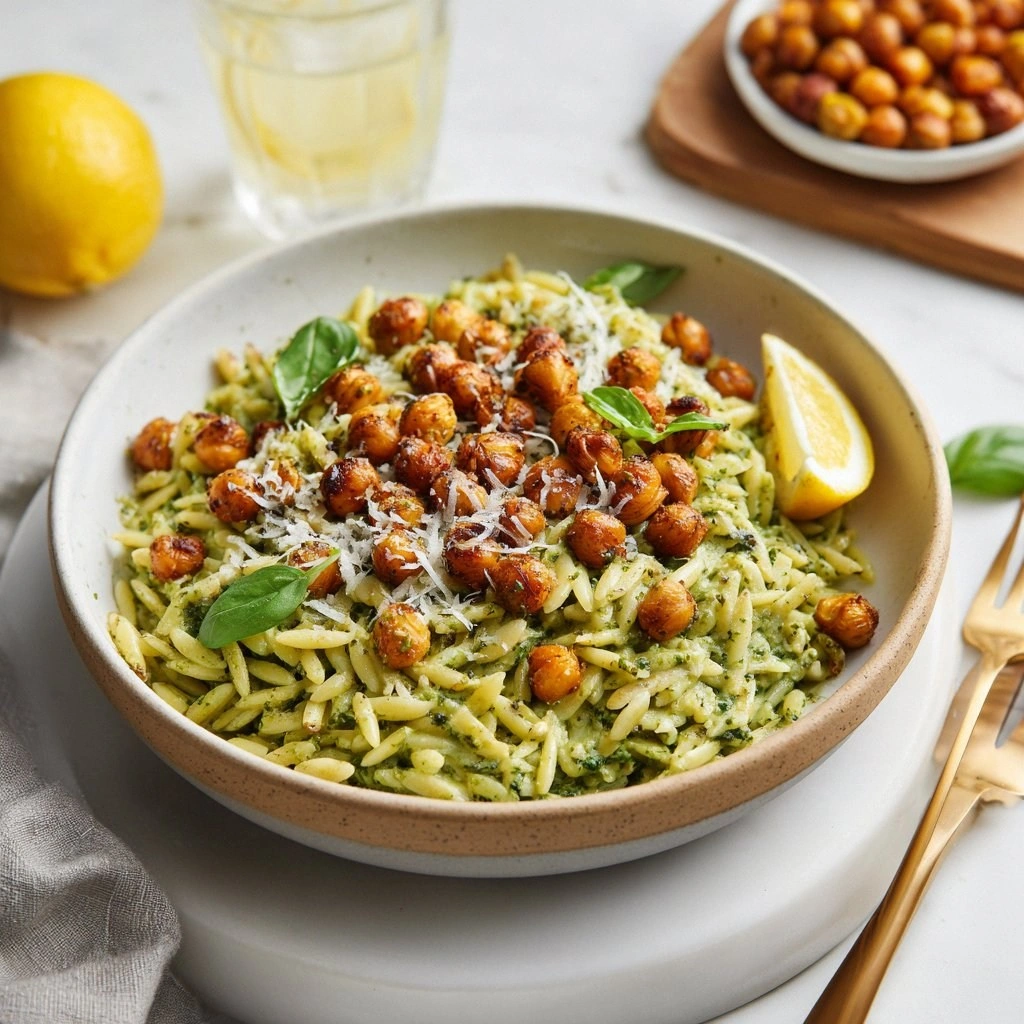
Picture this: I’m halfway through a week of bland take‑out, the fridge is a barren wasteland of leftovers, and a sudden craving for something bright, creamy, and utterly comforting hits me like a summer thunderstorm. I dive into the pantry, pull out a handful of orzo, a jar of pesto, a lemon, and a can of chickpeas, and I’m suddenly convinced I’ve stumbled upon the culinary equivalent of finding a hidden speakeasy in your own kitchen. The first thing that struck me was the scent—fresh basil, citrus, and a whisper of roasted garlic swirling together, promising a dish that would sing. The colors are a sun‑kissed palette: golden orzo, emerald pesto, a splash of bright lemon, and the deep, glossy sheen of creamy sauce. The texture, once the pasta is cooked, feels like a silky ribbon that clings to your fork, and when you add the chickpeas, that crunch breaks like thin ice, adding a delightful contrast. I was ready to share this, but I had to make sure I nailed every detail before I could brag.
This version is not just a remix; it’s a full‑on reinvention of what a lemon‑pesto pasta can be. I’ve taken the classic combination and turned it into a symphony of flavors that dance on the palate and linger long after the last bite. The sauce is thick, yet airy, thanks to a splash of cream and a generous amount of pesto that coats the orzo like velvet. The chickpeas are not just a filler; they’re roasted to a crisp that adds a satisfying bite and a protein boost that turns this from a side into a hearty main. I’ve added a splash of lemon juice and zest to cut through the richness and give it that bright, almost citrusy lift that keeps the dish from feeling heavy. Every ingredient is chosen to complement the others, creating layers that unfold with each mouthful. If you’ve ever tried a pesto pasta that feels flat or a lemon sauce that tastes like a lemon peel, you’re in for a revelation.
I dare you to taste this and not go back for seconds. That’s the kind of confidence I have in this dish. I’ve spent hours tweaking the ratios, experimenting with the timing of the chickpeas, and even testing different types of orzo to find the perfect bite. The result is a creamy, bright, and utterly satisfying plate that feels like a hug in a bowl. I’ve also discovered a trick that most recipes get wrong: the way you finish the sauce with a touch of cheese and a dash of fresh herbs right before serving. That last flourish turns a good dish into an unforgettable one. So buckle up, because by the end of this post, you’ll wonder how you ever made it any other way.
Let me walk you through every single step — by the end, you’ll wonder how you ever made it any other way.
What Makes This Version Stand Out
- Flavor Fusion: The combination of lemon zest, fresh basil pesto, and a hint of garlic creates a complex, layered taste that feels both familiar and adventurous. The brightness of the lemon cuts through the richness of the cream, while the pesto adds depth and a subtle peppery note.
- Texture Contrast: The orzo is cooked al dente, offering a firm bite that pairs beautifully with the silky sauce. The crispy chickpeas add a crunchy element that breaks up the creamy texture, making each bite dynamic and engaging.
- Simple Yet Elegant: With just a handful of pantry staples, you can produce a dish that looks restaurant‑quality. No exotic ingredients or complicated techniques are required, making it accessible for cooks of all levels.
- Make‑Ahead Friendly: The sauce can be prepared ahead of time and reheated without losing its silkiness. The chickpeas stay crisp, and the orzo can be tossed with a touch of oil to prevent sticking.
- Crowd‑Pleaser: Whether you’re feeding a family or hosting a dinner party, this dish is guaranteed to impress. Its bright, fresh flavor profile and comforting texture make it a versatile crowd‑pleaser.
- Ingredient Quality: Using high‑quality pesto and fresh lemons elevates the dish. Even a store‑bought pesto will work, but homemade adds an extra layer of authenticity.
- Balanced Nutrition: Packed with protein from chickpeas and cheese, healthy fats from olive oil, and complex carbs from orzo, this dish satisfies without compromising on nutrition.
- Seasonal Flexibility: While the lemon shines in summer, the dish remains delicious year‑round, making it a reliable go‑to recipe for any season.
Alright, let's break down exactly what goes into this masterpiece...
Inside the Ingredient List
The Flavor Base
The cornerstone of this dish is the lemon‑pesto sauce, a marriage of bright citrus and herbaceous basil. The lemon zest adds a fragrant, aromatic burst that elevates the entire plate. The lemon juice, on the other hand, cuts through the richness, providing a clean, refreshing finish. If you’re missing fresh lemons, a splash of white wine vinegar can mimic the acidity, but the natural citrus will always win.
The Texture Crew
Orzo pasta is the star of the show, chosen for its small, rice‑shaped grains that hold sauce beautifully. Cooking it to al dente ensures a firm bite that stands up to the creamy sauce. The chickpeas bring a satisfying crunch; roasting them until they’re golden and slightly charred adds a smoky depth that contrasts the bright sauce. If you’re short on time, simply sauté them with a pinch of salt and pepper for a quick crisp.
The Unexpected Star
While pesto and orzo are expected, the addition of fresh parsley and a sprinkle of pine nuts gives the dish an extra layer of freshness and nuttiness. Parsley brightens the sauce, while pine nuts add a subtle, buttery crunch that elevates the overall texture. If you’re vegan, simply omit the parmesan and use a vegan cheese or nutritional yeast for a cheesy finish.
The Final Flourish
A dash of red pepper flakes and freshly ground black pepper add a subtle heat that balances the sweetness of the lemon. A drizzle of extra‑virgin olive oil at the end of cooking brings a glossy sheen and a silky mouthfeel. If you want to add a splash of color, a sprinkle of toasted breadcrumbs or grated parmesan can create a delightful visual contrast.
Everything's prepped? Good. Let's get into the real action...
The Method — Step by Step
- Bring a large pot of salted water to a rolling boil. Add the orzo and cook according to package instructions until al dente, usually about 8–10 minutes. Reserve a cup of pasta water before draining; this will be essential for adjusting sauce consistency later.
- While the pasta cooks, heat 2 tablespoons of olive oil in a large skillet over medium heat. Add the minced garlic and sauté until fragrant and lightly golden, about 30 seconds. The garlic should smell nutty, not burnt.
- Add the chickpeas to the skillet, stirring to coat them in the garlic oil. Roast them until they’re golden brown and slightly crispy, about 5–7 minutes. Flip them halfway through to ensure even roasting. This step is the moment of truth—watch the edges pull away, and the aroma should be irresistible.
- In a separate bowl, combine the pesto, lemon zest, lemon juice, and cream (or Greek yogurt). Whisk until smooth and glossy. This creamy mixture should look like a velvety sauce ready to coat the pasta.
- Drain the orzo and return it to the pot. Pour the pesto‑cream mixture over the pasta, adding a splash of reserved pasta water to loosen the sauce. Stir vigorously until the orzo is evenly coated and the sauce is silky. The sauce should coat the pasta like a fine silk ribbon.
- Add the roasted chickpeas, toasted pine nuts, and chopped parsley to the pot. Toss everything together gently to distribute the ingredients evenly. The chickpeas should sit on top of the pasta, creating a delightful crunch with every forkful.
- Season with salt, pepper, and a pinch of red pepper flakes. Stir, taste, and adjust the seasoning as needed. The dish should have a bright, balanced flavor profile with a gentle kick from the flakes.
- Serve immediately, garnished with extra grated parmesan, a squeeze of fresh lemon juice, and a sprinkle of chopped parsley. The final dish should look vibrant, with a glossy sheen and a burst of color from the herbs.
That's it — you did it. But hold on, I've got a few more tricks that'll take this to another level...
Insider Tricks for Flawless Results
The Temperature Rule Nobody Follows
Cooking pasta at a rolling boil ensures even cooking and prevents sticking. If the water isn’t hot enough, the pasta will absorb too much water and become mushy. Keep the heat steady, and add the salt once the water reaches a full boil to avoid a sudden drop in temperature.
Why Your Nose Knows Best
Smell the sauce as it simmers; a buttery, garlicky aroma signals that the pesto has released its oils. If the aroma fades or turns bitter, it’s a sign you’ve over‑cooked the garlic. Adjust the heat down to avoid burning.
The 5‑Minute Rest That Changes Everything
After draining the pasta, let it sit for 2 minutes before adding the sauce. This pause allows the starches to settle, so the sauce can cling better. It also gives the pasta a chance to steam, enhancing its texture.
Roast Chickpeas to Perfection
Use a baking sheet for roasting chickpeas; this allows air to circulate and ensures even crisping. Toss them in a small amount of oil and season with salt, pepper, and smoked paprika before roasting. The smoky flavor adds depth that balances the bright lemon.
Finishing Touches Matter
A final squeeze of lemon juice right before serving brightens the dish and cuts through the creaminess. Adding a handful of fresh basil or mint leaves at the end gives a burst of freshness that lifts the entire plate.
The 5‑Minute Rest That Changes Everything
After cooking the pasta, reserve a cup of pasta water. This starchy liquid is a secret weapon for adjusting sauce consistency. If the sauce becomes too thick, add a splash of this water to loosen it without diluting flavor.
Creative Twists and Variations
This recipe is a playground. Here are some of my favorite ways to switch things up:
Spinach & Sun‑Dried Tomato Orzo
Add a handful of sautéed spinach and sun‑dried tomatoes for a Mediterranean twist. The spinach adds earthiness, while the sun‑dried tomatoes bring a sweet, umami punch that pairs wonderfully with the lemon.
Creamy Avocado Pesto Orzo
Blend ripe avocado with basil, garlic, and lemon juice to create a creamy, dairy‑free pesto. This version offers a buttery texture and a boost of healthy fats, making it a perfect vegan option.
Smoky Chipotle Pesto Orzo
Swap regular pesto for a smoky chipotle pesto made with roasted red peppers, chipotle in adobo, and cilantro. The heat and smoky flavor add depth, creating a dish that’s both bold and comforting.
Grilled Chicken & Lemon Pesto Orzo
Add grilled chicken strips to the mix for a protein‑packed lunch or dinner. The chicken’s smoky char complements the bright lemon and pesto, turning this into a full‑blown meal.
Pesto‑Infused Creamy Tomato Orzo
Incorporate a splash of tomato sauce into the creamy pesto mixture for a red‑hued, tangy variation. The tomato adds a subtle sweetness that balances the acidity of the lemon.
Storing and Bringing It Back to Life
Fridge Storage
Store leftovers in an airtight container in the refrigerator for up to 3 days. Keep the sauce separate from the pasta if you plan to reheat; this prevents the pasta from becoming mushy. When ready to eat, gently reheat over low heat, adding a splash of pasta water or a bit of fresh cream to revive the sauce.
Freezer Friendly
Freezing works best if you separate the sauce and pasta. Freeze the sauce in a freezer‑safe container for up to 2 months. Reheat the sauce first, then add the thawed pasta and stir to combine. The texture may be slightly softer, but the flavor remains intact.
Best Reheating Method
Reheat the dish gently on the stovetop, stirring constantly to avoid scorching. Add a tiny splash of water or broth to keep the sauce from drying out. The goal is to warm the dish evenly without overcooking the orzo.