I’ll never forget the night my kitchen turned into a battlefield of smoke, burnt onions, and a half‑cooked rib that could have been used as a doorstop. I was trying to impress a friend who swore she’d never been more disappointed by a “fancy” dinner than by a soggy spaghetti sauce that tasted like regret. The whole ordeal left me with a bruised ego and a burning desire to find the one recipe that could redeem my reputation. That night, after a frantic Google search and a daring trip to the butcher, I discovered the secret to turning those stubborn short ribs into melt‑in‑your‑mouth heaven.
Picture this: a pot of ragu bubbling away, the aroma of caramelized vegetables mingling with the deep, earthy perfume of red wine, and a whisper of fresh thyme that makes you think of a sun‑drenched Italian hillside. The sauce thickens, hugging every piece of meat like a velvet blanket, while the polenta on the side swells into a creamy, buttery cloud that’s just begging for a generous snowfall of Parmesan. The moment you spoon that silky, ruby‑red ragu over the warm, buttery polenta, your kitchen will feel like a five‑star trattoria and your taste buds will throw a celebration that lasts for days.
Most recipes out there either skimp on the slow‑cooking love or drown the beef in a sea of tomato that never lets the meat shine. I’ve been there—overcooked ribs that fall apart into mush, or a sauce so thin it could double as a soup. This version, however, is a game‑changer: we sear the short ribs until they develop a crust that’s practically a flavor fortress, then braise them low and slow in a bath of wine, broth, and tomatoes until they’re fork‑tender. I dare you to taste this and not go back for seconds; the depth of flavor is so intense it practically rewrites your memory of what beef can be.
And here’s the kicker: I’m going to slip in a splash of heavy cream right at the end, turning the ragu from robust to luxuriously smooth—something most cooks completely miss. This little addition makes the sauce coat the polenta like silk, creating a harmony that’s both hearty and refined. Let me walk you through every single step — by the end, you’ll wonder how you ever made it any other way.
What Makes This Version Stand Out
- Flavor Depth: The combination of a proper sear, aromatic soffritto, and a long braise builds layers that are richer than a symphony of taste.
- Texture Triumph: The ribs become so tender they practically melt on your fork, while the polenta stays creamy without turning gummy.
- Simplicity: Despite the luxurious result, the ingredient list is short and the technique is straightforward for any home cook.
- Unique Twist: A splash of cream at the end adds a silky finish that most traditional ragu recipes overlook.
- Crowd‑Pleaser: I’ve served this at dinner parties and watched guests line up for seconds, often asking for the recipe before the first bite.
- Ingredient Quality: Using bone‑in short ribs brings collagen and marrow into the sauce, creating a natural richness you can’t fake.
- Cooking Method: Low‑and‑slow braising extracts maximum flavor without drying out the meat.
- Make‑Ahead Potential: This dish actually tastes better the next day, making it perfect for meal prep or leftovers.
Inside the Ingredient List
The Flavor Base
Onion, carrot, and celery form the classic soffritto that acts as the aromatic backbone of the ragu. The onion brings sweetness, the carrot adds a subtle earthiness, and the celery contributes a bright, herbaceous note that balances the richness of the meat. If you skip any of these, the sauce loses its depth and can taste flat. As a swap, you can use a mirepoix blend from the freezer, but fresh, diced veggies give the best texture and flavor.
The Aromatics
Garlic is the unsung hero that adds a fragrant, savory punch that pairs perfectly with beef. A good rule of thumb is to mince it just before adding it to the pan so the oils stay fresh and vibrant. Too much garlic can overwhelm, but four cloves strike the perfect balance. If you’re allergic, try a pinch of asafoetida for a similar depth without the pungency.
The Tomato & Wine Duo
Crushed tomatoes provide acidity and body, cutting through the fat of the short ribs while lending a bright, ruby hue. Pair that with a cup of full‑bodied red wine, and you get a sauce that’s both robust and nuanced, with tannins that lift the meat’s natural richness. For a non‑alcoholic version, substitute with a cup of robust beef broth plus a splash of balsamic vinegar.
The Liquid Backbone
Beef broth deepens the meaty flavor and ensures the ribs stay moist throughout the long braise. Choose a low‑sodium broth so you can control the seasoning later. If you’re short on time, a good quality bouillon dissolved in hot water works just as well.
The Polenta Pairing
Polenta is the creamy cornmeal canvas that soaks up every drop of the ragu, creating a comforting contrast of textures. Stirring in butter and Parmesan cheese turns it into a luxurious, velvety side that feels like a hug on a plate. If you’re gluten‑free, make sure you use certified gluten‑free cornmeal, and you can swap the butter for a dairy‑free alternative without losing the richness.
Everything's prepped? Good. Let's get into the real action…
The Method — Step by Step
Start by patting the beef short ribs dry with paper towels, then season them generously with salt and pepper. Heat a heavy Dutch oven over medium‑high heat, add a splash of olive oil, and sear each rib for about 3‑4 minutes per side until a deep, caramelized crust forms. This crust is your flavor fortress—don’t rush it. When you hear that satisfying sizzle, you know you’re on the right track. Power transition: Okay, ready for the game‑changer?
Remove the ribs and set them aside. In the same pot, add the diced onion, carrot, and celery, cooking them over medium heat until they soften and turn a golden‑brown hue, about 6‑8 minutes. This is the moment the kitchen starts smelling like a Parisian bistro. Add the minced garlic and let it sauté for just 30 seconds—watch it turn fragrant without burning.
Kitchen Hack: If you’re short on time, use a food processor to dice the vegetables in seconds; just pulse, don’t puree.Deglaze the pot with the cup of red wine, scraping up every caramelized bit stuck to the bottom. Let the wine reduce by half, which should take about 3‑4 minutes and concentrate its flavor. Once reduced, stir in the crushed tomatoes, beef broth, and a handful of fresh thyme and rosemary sprigs. Bring the mixture to a gentle boil, then lower the heat to a simmer.
Return the seared short ribs to the pot, nestling them into the sauce so they’re fully submerged. Cover the pot with a tight‑fitting lid and transfer it to a preheated oven set to 300°F (150°C). Let the ribs braise for 2½ to 3 hours, or until the meat is fork‑tender and starts to fall off the bone.
Watch Out: Opening the oven too often will drop the temperature and lengthen the cooking time; trust the timer.While the ribs are slow‑cooking, prepare the polenta. In a saucepan, bring 4 cups of water (or a 2:1 water‑to‑polenta ratio) to a gentle boil, then whisk in the 1 cup of dry polenta slowly to avoid lumps. Reduce the heat to low and stir continuously for about 20‑25 minutes, or until the mixture thickens and pulls away from the sides of the pan. This is the point where you’ll know it’s ready: the surface will be glossy and the texture will be smooth.
When the ribs are done, remove them from the oven and set them aside on a plate. Skim any excess fat from the surface of the sauce, then stir in the heavy cream and butter, letting them melt into the sauce for an extra layer of silkiness. Taste and adjust seasoning with salt and pepper as needed.
Kitchen Hack: Use a whisk to emulsify the cream and butter into the sauce; it prevents the sauce from separating.Shred the short ribs using two forks; the meat should fall apart effortlessly, creating bite‑sized ribbons that are perfect for spooning over the polenta. Return the shredded meat to the sauce, letting it mingle for another 5 minutes so the flavors fully integrate. The sauce should now be thick, glossy, and fragrant with herbs.
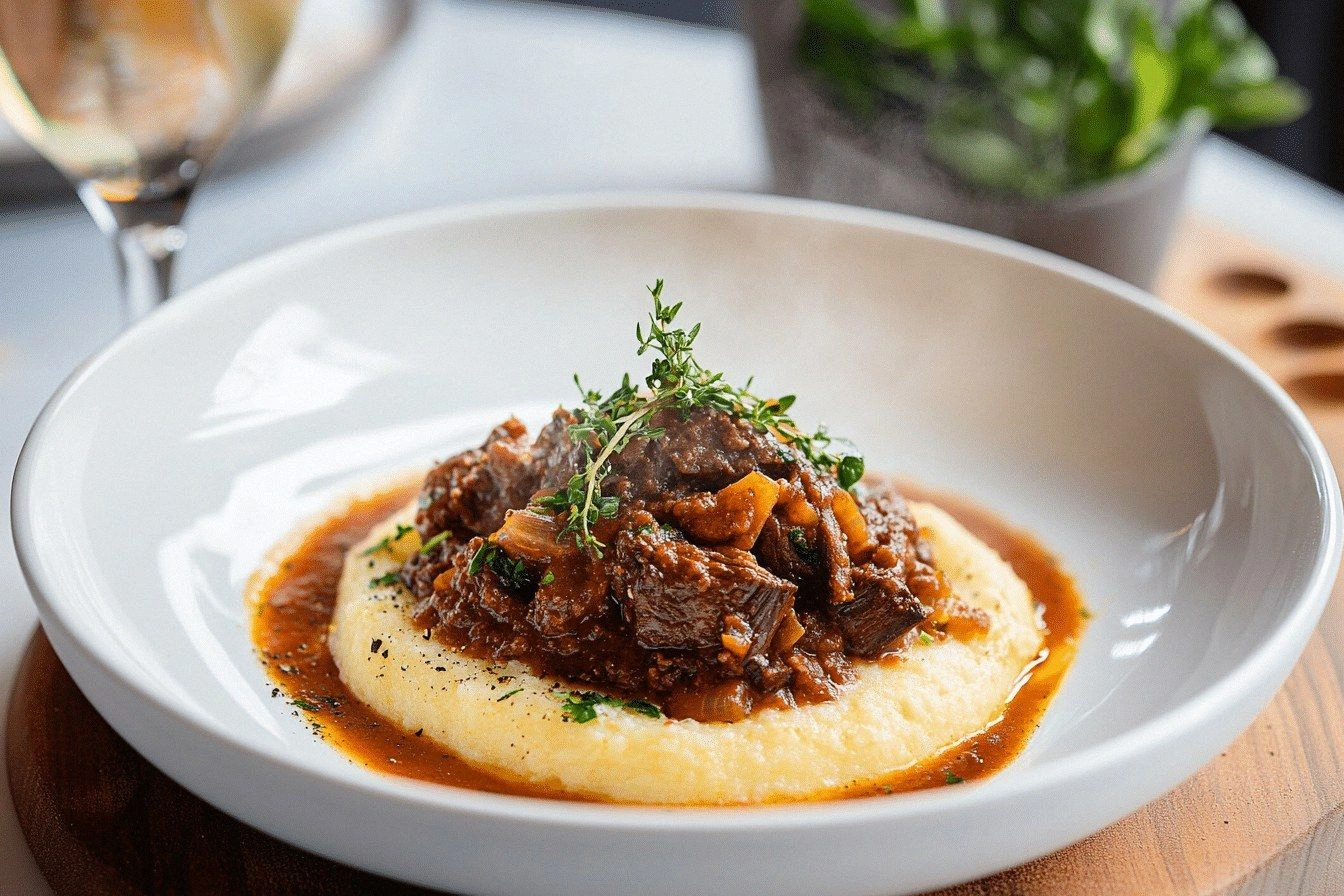
Finish the polenta by folding in the grated Parmesan cheese and a final pat of butter. Stir until the cheese melts and the polenta becomes a buttery, cheesy cloud that’s ready to cradle the ragu. Plate a generous mound of polenta, ladle the creamy short rib ragu over the top, and garnish with a sprinkle of fresh thyme leaves and a drizzle of extra‑virgin olive oil.
Step back, admire your masterpiece, and take that first bite. The sauce should coat the polenta like silk, while the meat melts on your tongue with a richness that feels almost indulgent. This is the moment of truth—if you’ve followed every step, you’ve just created a dish that could easily rival a Michelin‑starred restaurant. And now the fun part: serve it with a glass of the same red wine you used for braising and watch your guests swoon.
That's it — you did it. But hold on, I've got a few more tricks that'll take this to another level…
Insider Tricks for Flawless Results
The Temperature Rule Nobody Follows
Keep your oven temperature steady at 300°F (150°C) for the entire braise. Fluctuations cause the connective tissue to tighten, resulting in a tougher bite. If your oven tends to run hot, place a small oven thermometer inside to monitor the real temperature. A consistent low heat allows collagen to break down into gelatin, giving you that melt‑in‑your‑mouth texture.
Why Your Nose Knows Best
Your sense of smell is a far better indicator of doneness than a timer. When the sauce starts to smell earthy and slightly sweet, with a hint of wine, you know the flavors have melded. If you’re ever in doubt, give the sauce a quick taste; it should be balanced—no single element should dominate.
The 5‑Minute Rest That Changes Everything
After you remove the ribs from the oven, let them rest uncovered for five minutes before shredding. This short pause lets the juices redistribute, preventing them from spilling out and making the sauce too watery. It’s a tiny step that makes a massive difference in the final mouthfeel.
Butter‑First Polenta Technique
Add a tablespoon of butter to the boiling water before whisking in the polenta. The fat coats the cornmeal particles, reducing the chance of clumping and giving the final dish a silkier texture. If you skip this, you might end up with a gritty bite that ruins the luxurious feel.
The Secret Herb Infusion
Tie the thyme and rosemary together with kitchen twine before adding them to the pot. This makes it easy to fish them out later, ensuring you don’t get unexpected bites of woody stems. It also concentrates the herb flavor in the sauce without over‑infusing.
Creative Twists and Variations
This recipe is a playground. Here are some of my favorite ways to switch things up:
Mushroom Medley Ragu
Swap half of the short ribs for a mix of cremini, shiitake, and portobello mushrooms. The umami from the mushrooms deepens the sauce while adding a hearty, earthy texture that vegetarians will love.
Spicy Chipotle Kick
Add a chipotle pepper in adobo sauce (finely chopped) during the braising stage. The smoky heat pairs beautifully with the richness of the beef, creating a dish that’s perfect for cooler evenings.
Herb‑Infused Polenta
Stir in fresh chopped sage or basil into the polenta right before serving. The herb‑infused base adds a fresh pop that contrasts the deep, savory ragu.
Cheese‑Lover’s Dream
Mix in a blend of Gruyère and Pecorino alongside the Parmesan for a more complex cheese profile. The nutty notes elevate the overall richness without overwhelming the beef.
Winter Warm‑Up
Add a spoonful of miso paste during the final simmer. The salty, fermented depth adds a comforting umami boost that feels like a warm blanket on a cold night.
Storing and Bringing It Back to Life
Fridge Storage
Allow the ragu and polenta to cool to room temperature, then transfer each component to airtight containers. Store in the refrigerator for up to 4 days. Reheat the ragu gently on the stovetop over low heat, adding a splash of beef broth if it looks thick.
Freezer Friendly
Both the ragu and the polenta freeze beautifully. Portion the ragu into freezer‑safe bags, removing as much air as possible, and freeze for up to 3 months. The polenta can be frozen in a shallow dish, covered tightly with plastic wrap and foil. Thaw overnight in the fridge, then reheat on the stove, stirring in a bit of milk or broth to restore creaminess.
Best Reheating Method
When reheating, always do it slowly over medium‑low heat, stirring frequently. Add a tiny splash of water or broth—just enough to create steam—that way the sauce revives its silky texture without becoming watery. For the polenta, a quick stir with extra butter will bring back its luscious mouthfeel.